Part 3 of the Daniel Ferguson Story
Frances Perritt, my husband grandmother, saved a clipping of her grandmother’s obituary. Her Grandmother, Margaret St John Ferguson Reynolds, was Daniel’s daughter. The part in the obituary about Daniel reads:
Her father Daniel H Ferguson was a mill man and steamboat owner. In the early days and at one time he owned the dam where Oregon City locks are now located.
The obituary of Louis P. Reynolds reads that “he was the grandson of the late Daniel H. Ferguson who was one of the principal owners of the Willamette Falls Canal and Milling Co. of Oregon City, in 1852 to 1853.”
In my search for the owner of Willamette Falls Canal and Milling Co., I found several articles about Robert Moore saying he was the owner of this company. Then after much searching, I found a newspaper article In the Oregon Argus, dated August 21, 1858. This article explained the ownership of this company. But first a little background would be appropriate.
Before Daniel bringing his family to Willamette Valley, he prospected for gold on the Yuba River in northern California. He and his brother, Thomas, had other business besides gold mining. One was investing in fast growing towns. Thomas wrote in a letter to his wife in Florida in April of 1850. He said “I have invested in Lindd <sic> City (Linn City, Oregon) one thousand dollars.”
Daniel and Thomas were in business together. They referred to themselves as Ferguson & Ferguson or the Ferguson Brothers.
So, Daniel had some dealings with Linn City a couple of years before his arrival in Oregon.
The Main Water Ways of Oregon
Before railroads came to the Willamette Valley, travel by steamboat was the main way to get between Astoria and Marysville. Shipping on the upper and lower Willamette was a profitable enterprise.
Two river dominated Daniel’s life after he moved with his family to Oregon—the Columbia and the Willamette. The Columbia River separated Washington Territory from Oregon Territory when Washington Territory was established on March 2, 1853.
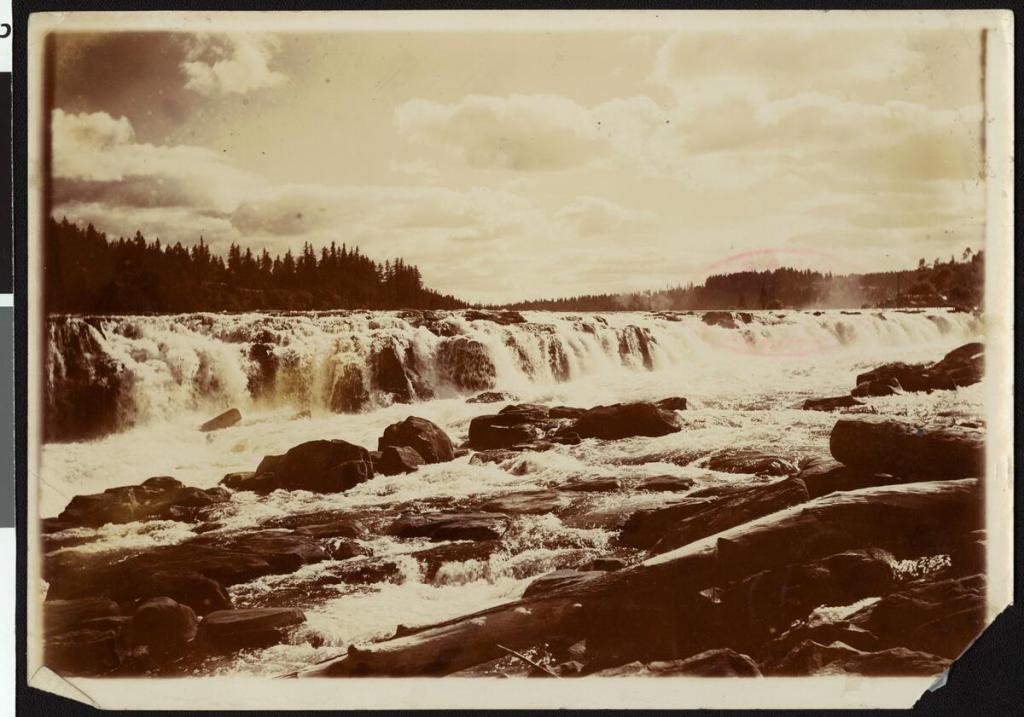
The Willamette River flows through the Willamette Valley north from Eugene. The upper tributaries of the Willamette originate in the mountains outside Eugene. On its way north to the Columbia River this river flows through the many Oregon towns. Some of these towns along the upper Willamette are Eugene, Corvallis, Albany, Salem, Newburg, Wilsonville, Oregon City, and Portland. It empties into the Columbia River at Kelley Point, Portland, Oregon. It is the 13th largest river by volume in the United States. The Willamette Falls is located between West Linn and Oregon city. It is the second largest waterfall by volume of water in the U.S.
This large waterfall was an obstacle to steamboat travel on the Willamette River between the upper and lower river.
Grass crops like wheat and rye did well in the upper Willamette Valley. The excess crops needed to be transported down the Willamette to Portland and beyond.
Ideally transporting these excess crops on the river would solve the problem. The typical steamship was large and deep keeled. It couldn’t maneuver in the shallow water of the upper river beyond Oregon City. The Lot Whitcomb, built in Milwaukie, Oregon in 1850, ran on the lower Willamette. She traveled between Milwaukie and Astoria. Daniel planned to enter this new industry with boats designed for the shallower upper river waters. Getting the right design of steamboat was not the only problem.
The other problem was getting the goods from the upper river to the lower river. There was a 35 feet drop over Willamette Falls at Oregon City. A portage road around the falls existed at this time.
Robert Moore’s Linn City
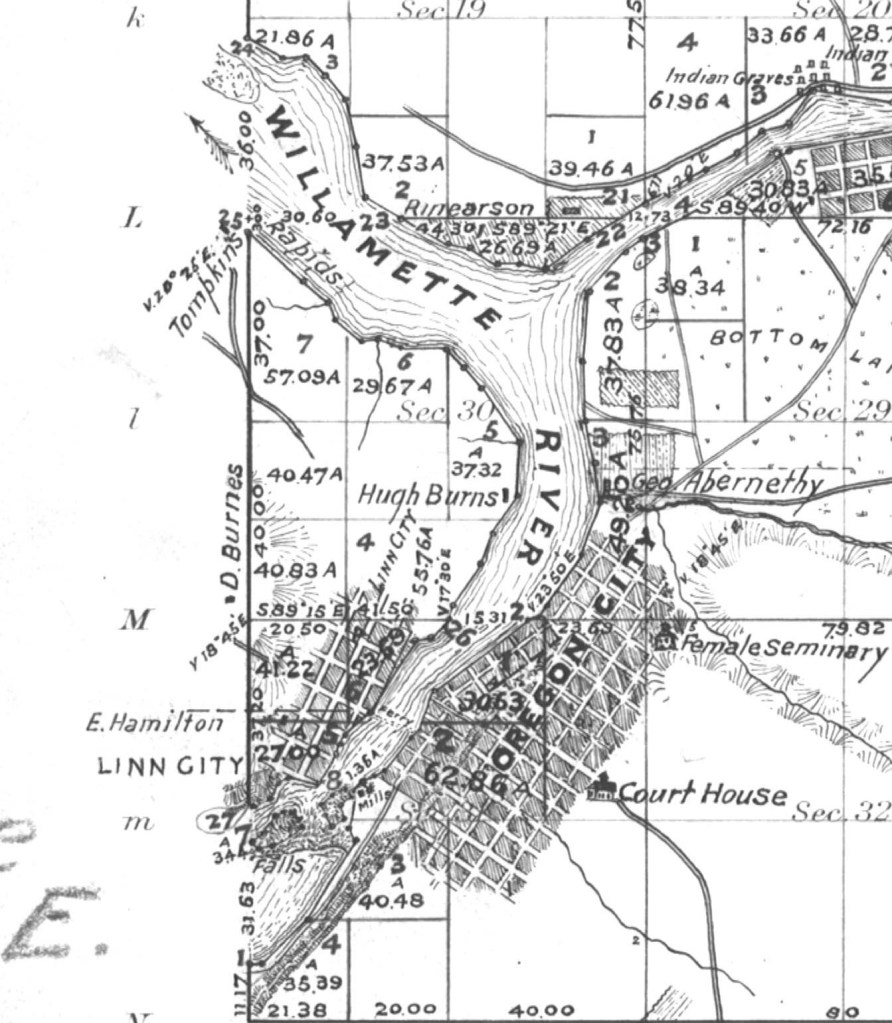
Robert Moore’s Linn City (West Linn) was situated on the west bank of the Willamette River. Oregon City on the east side was directly across the river. In 1846, Linn City consisted of about 15 houses occupied by mechanics employed by Moore. They worked in his flour and lumber mills. His employees also ran a ferry which crossed the river to Oregon City. Moore also owned Willamette Falls, Canal, Milling and Transportation Company and a newspaper, The Spectator.
Daniel Ferguson in Linn City
When the Ferguson family came to Portland, they soon acquired a home there. Their house stood on 2nd Street, one door down north of Mill Street. It was close to the Willamette River. Soon after they were settled in Portland, Daniel started traveling upriver to Linn City. By 1853 Daniel even had living quarters on the hillside overlooking Linn City. Robert Moore lived nearby. By the time, this man was tremendously overweight, unhealthy and had debts.
In December 1852, Robert Moore transferred the title and the land of this company to Daniel. Robert gained some capital and a promissory note. Daniel acquired a ten-year mortgage. Daniel was now the owner of the Willamette Falls, Canal, Milling and Transportation Company. He also owned the land where the Oregon City Locks are now located. Daniel’s ownership of these properties lasted only a few months.
In January, 1853, he asked the provincial government of the Oregon territory for permission to incorporate this business. Then in March of that year he transferred the title and the debt to this new corporation. People referred to this company as the Willamette Falls Company, the Willamette Falls Canal Company, D. Ferguson Company and Messrs., Ferguson and Company.
Daniel’s Building Projects at Canemah
In June of 1853 Daniel ran this ad in The Weekly Oregonian.
Wanted Immediately
Twelve good drillers and blasters; Fifty good common labors, person used to quarrying and working rock; Six good carpenters, such as are used to working timber; Three good hands used to boating and rafting timber; Also One good blacksmith, one that is competent to do all kinds of black smith work.
Constant employment and good wages will be given to such by applying to the office of the Willamette Falls Canal Company.
Daniel H. Ferguson Superintendent
“Wanted Immediately,” Weekly Oregonian (Portland, Oregon) 2 July 1853, p.3; digital images, GenealogyBank (http//:www.genealogybank.com
Daniel wanted to build a breakwater. His men would dig a basin big enough to accommodate a steamboat while loading and unloading cargo. This work would be carried out at Canemah. Canemah was at the southern end of portage around Willamette Falls. It was used by native Americans as a takeout place for canoes before carrying the canoes around the falls. Here boat traffic from the upper Willamette River stopped. People and goods were unloaded and taken around the falls to Oregon City around the falls. Then they were loaded into another boat.
Before Daniel left Canemah he and his men had built a sawmill, gristmill a warehouse, and a wharf.
In August of 1853 Daniel Ferguson is praised by the editor of the Oregon Spectator. The article reads.
At Canemah, within the past twelve months…Our neighbor too, Linn City is not behind in enterprise and good works. Under the energetic management of D. Ferguson and Company, a fine breakwater and dam are rapidly advancing to completion. Mills and warehouses are now framed and soon to be erected, all calculated to give unsurpassed facilities for transportation of merchandise above and below the falls together with magnificent water power which could drive all the mills of Lowell and Rochester combined. The work is built so far as we can judge, in the most durable and permanent manner, with great strength and on a judicious plan. Nature has done wonders for the locality, and Messrs., Ferguson and Co. are most ably seconding her labors.
“Improvement,” Oregon Spectator, (Oregon City, Oregon) 26 August 1853, p.2 col 2; digital images; Historic Oregon Newspapers,(http://oregonnews.edu
In the January 7th 1854, the editor of the Spectator again praises Daniel’s work in Linn City. The editor describes the breakwater Daniel is having built. The editor also describes a device Daniel is having built that will make unloading and loading the boats much easier.
…The plan is admirable, and no giant power of water could have been more completely controlled and managed. The breakwater is some thirty rods cast from, and running parallel with the west bluff of the river, and continues near one-fourth of a mile up the river from the perpendicular falls, so that by a connection of the west bluff with the breakwater by a dam passing along near the brink of the precipice, the various designs and objects in view of water into are fully accomplished, viz: the reception of water into the harbor for the admission of steamers, and for the purpose of driving their and extensive saw and flouring mills and enable them to exchange the lading from boats above and below the falls, loaded with the various products of the upper country, and those below laden with goods, can come together and have their freight discharged by a timber built into cribs, which are piled with stone and sufficiently covered with plank. The works are placed upon the solid rock and are as lasting and durable as the very hills. Ferguson and Co. are much applauded for the undertaking of that which seemed almost impossible…
“For the Spectator,” Oregon Spectator, (Oregon City, Oregon) 7 January 1854, p.2 col 3; digital images; Historic Oregon Newspapers,(http://oregonnews.edu
The Steamboats
In 1851, the only way boating on the upper Willamette was by canoe. The trip to Salem and Marysville (Corvallis) was long, tiring and not practical for transporting goods.
In 1853, four steamboats operated out of Canemah. They were the Oregon, the Wallamet, the Portland and the Belle. Daniel’s Willamette Falls Company, owned the Belle and the Oregon. In April 1854 ,Daniel planned to launch another steamboat that was being built at Canemah. This steamboat, the Gazelle, would run on the upper river between Marysville and Canemah.
The Belle, which was already in service ran on the lower river. With the launch of the Gazelle the company would have three steamboats on the Willamette River.
On March 4, 1854, Daniel puts this ad in the Weekly Oregonian.
Notice to the Public
The Willamette Falls Co. is now ready to receive and forward all kinds of merchandise, through their new warehouse, up and down the river. The steamer Belle, Capt. Wells, is running from Portland to the falls in connection with the steamer Oregon from our new warehouse to the head of navigation on the upper Willamette.
The new steamer Gazelle, under the command of Capt. R. Hereford, will be ready to run in a few days.
Charge for passing freight over the fall is $1 per ton.
Passengers will be conveyed to and from Oregon City at all times with dispatch.
D. H. FERGUSON, Superintendent
Notice to the Public,” Weekly Oregonian, (Portland, Oregon) 4March 1854, p.5 Col. 1, digital images, GenealogyBank.com, (http://www.genealogybank.com
On March 11, 1854, Daniel puts this ad in the Weekly Oregonian.

On March 18, 1854 the Gazelle made her first run on the upper Willamette with Capt. Robert Hereford at the helm. A local newspaper had this to say about the run.
The fine weather and good music tended not a little to enhance the pleasure of the ladies and gentlemen on board, and all were highly entertained and pleased. Her tables are laden with Oregon’s choicest productions, together with a select variety of imported fruit, etc. Who wishes for better accommodations, even in this Tyee day of Oregon refinement?
“Gazelle (sidewheeler,1854)”, Wikipedia, Sept. 1, 2011, (http://en.wikipedia.org:
In this description of the Gazelle’s first trip on the upper Willamette, the editor uses the term “Typee day. The term, “Typee day”, comes from a novel by Herman Melville called Typee and published in 1846. It means a relaxed and unhurried day. This is a high point in Daniel’s life’s work and is about to change. It would be a long time before Daniel had a Typee day again.


Leave a comment