Tag: Oregon Pioneers

  • Water and Steamboats

    Part 3 of the Daniel Ferguson Story

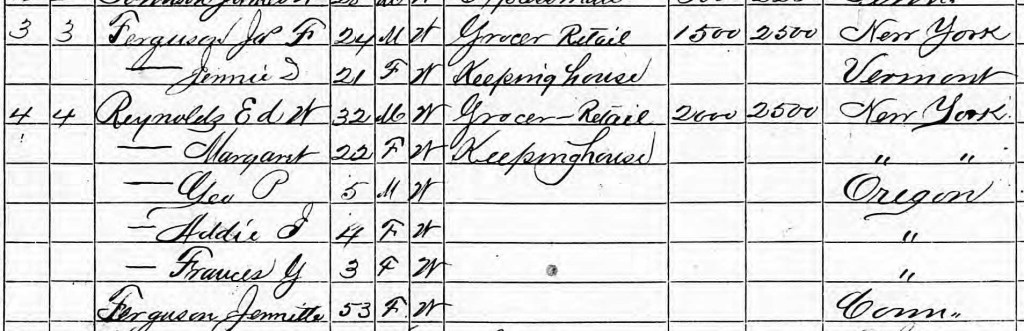
    Frances Perritt, my husband grandmother, saved a clipping of her grandmother’s obituary. Her Grandmother, Margaret St John Ferguson Reynolds, was Daniel’s daughter. The part in the obituary about Daniel reads:

    Her father Daniel H Ferguson was a mill man and steamboat owner. In the early days and at one time he owned the dam where Oregon City locks are now located.

    The obituary of Louis P. Reynolds reads that “he was the grandson of the late Daniel H. Ferguson who was one of the principal owners of the Willamette Falls Canal and Milling Co. of Oregon City, in 1852 to 1853.”

    In my search for the owner of Willamette Falls Canal and Milling Co., I found several articles about Robert Moore saying he was the owner of this company. Then after much searching, I found a newspaper article In the Oregon Argus, dated August 21, 1858. This article explained the ownership of this company. But first a little background would be appropriate.

    Before Daniel bringing his family to Willamette Valley, he prospected for gold on the Yuba River in northern California. He and his brother, Thomas, had other business besides gold mining. One was investing in fast growing towns. Thomas wrote in a letter to his wife in Florida in April of 1850. He said “I have invested in Lindd <sic> City (Linn City, Oregon) one thousand dollars.”

    Daniel and Thomas were in business together. They referred to themselves as Ferguson & Ferguson or the Ferguson Brothers.

    So, Daniel had some dealings with Linn City a couple of years before his arrival in Oregon.

    The Main Water Ways of Oregon

    Before railroads came to the Willamette Valley, travel by steamboat was the main way to get between Astoria and Marysville. Shipping on the upper and lower Willamette was a profitable enterprise.

    Two river dominated Daniel’s life after he moved with his family to Oregon—the Columbia and the Willamette. The Columbia River separated Washington Territory from Oregon Territory when Washington Territory was established on March 2, 1853.

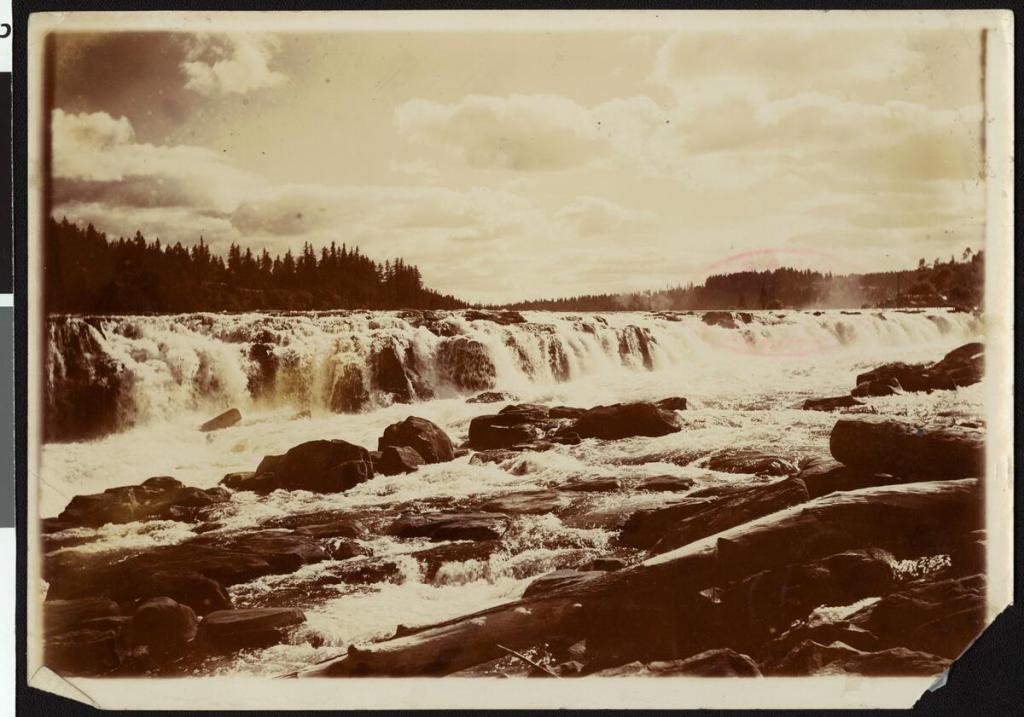
    The Willamette River flows through the Willamette Valley north from Eugene. The upper tributaries of the Willamette originate in the mountains outside Eugene.  On its way north to the Columbia River this river flows through the many Oregon towns. Some of these towns along the upper Willamette are Eugene, Corvallis, Albany, Salem, Newburg, Wilsonville, Oregon City, and Portland. It empties into the Columbia River at Kelley Point, Portland, Oregon. It is the 13th largest river by volume in the United States. The Willamette Falls is located between West Linn and Oregon city. It is the second largest waterfall by volume of water in the U.S.

    This large waterfall was an obstacle to steamboat travel on the Willamette River between the upper and lower river.

    Photograph of Willamette Falls in Oregon City, Oregon, from California Historic Society and USC

    Grass crops like wheat and rye did well in the upper Willamette Valley. The excess crops needed to be transported down the Willamette to Portland and beyond.

    Ideally transporting these excess crops on the river would solve the problem. The typical steamship was large and deep keeled. It couldn’t maneuver in the shallow water of the upper river beyond Oregon City. The Lot Whitcomb, built in Milwaukie, Oregon in 1850, ran on the lower Willamette. She traveled between Milwaukie and Astoria. Daniel planned to enter this new industry with boats designed for the shallower upper river waters. Getting the right design of steamboat was not the only problem.

    The other problem was getting the goods from the upper river to the lower river.  There was a 35 feet drop over Willamette Falls at Oregon City. A portage road around the falls existed at this time.

    Robert Moore’s Linn City

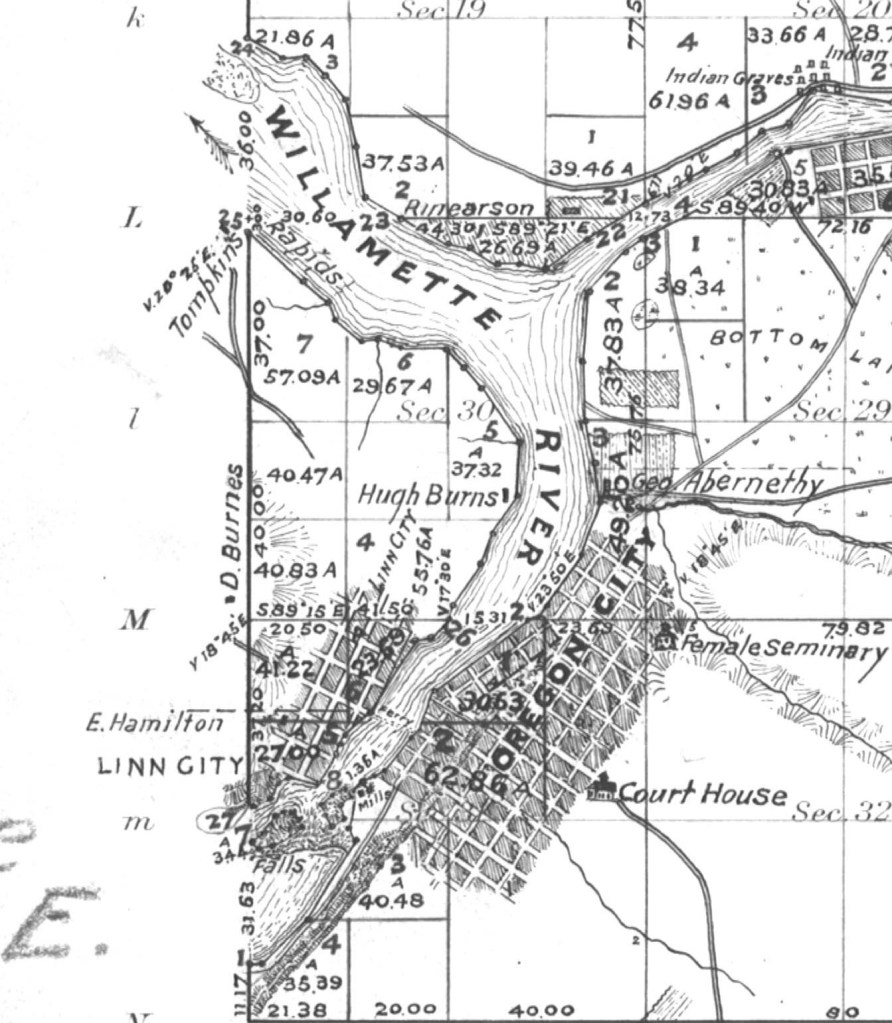
    Donation Land Claim Map 1852 Linn City and Oregon City from West Linn Historical Society

    Robert Moore’s Linn City (West Linn) was situated on the west bank of the Willamette River. Oregon City on the east side was directly across the river. In 1846, Linn City consisted of about 15 houses occupied by mechanics employed by Moore. They worked in his flour and lumber mills. His employees also ran a ferry which crossed the river to Oregon City. Moore also owned Willamette Falls, Canal, Milling and Transportation Company and a newspaper, The Spectator.

    Daniel Ferguson in Linn City

    When the Ferguson family came to Portland, they soon acquired a home there. Their house stood on 2nd Street, one door down north of Mill Street. It was close to the Willamette River. Soon after they were settled in Portland, Daniel started traveling upriver to Linn City. By 1853 Daniel even had living quarters on the hillside overlooking Linn City. Robert Moore lived nearby. By the time, this man was tremendously overweight, unhealthy and had debts.

    In December 1852, Robert Moore transferred the title and the land of this company to Daniel. Robert gained some capital and a promissory note. Daniel acquired a ten-year mortgage. Daniel was now the owner of the Willamette Falls, Canal, Milling and Transportation Company. He also owned the land where the Oregon City Locks are now located. Daniel’s ownership of these properties lasted only a few months.

     In January, 1853, he asked the provincial government of the Oregon territory for permission to incorporate this business. Then in March of that year he transferred the title and the debt to this new corporation. People referred to this company as the Willamette Falls Company, the Willamette Falls Canal Company, D. Ferguson Company and Messrs., Ferguson and Company.

    Daniel’s Building Projects at Canemah

    In June of 1853 Daniel ran this ad in The Weekly Oregonian.

    Wanted Immediately

    Twelve good drillers and blasters; Fifty good common labors, person used to quarrying and working rock; Six good carpenters, such as are used to working timber; Three good hands used to boating and rafting timber; Also One good blacksmith, one that is competent to do all kinds of black smith work.

    Constant employment and good wages will be given to such by applying to the office of the Willamette Falls Canal Company.

    Daniel H. Ferguson         Superintendent

    “Wanted Immediately,” Weekly Oregonian (Portland, Oregon) 2 July 1853, p.3; digital images, GenealogyBank (http//:www.genealogybank.com

    Daniel wanted to build a breakwater. His men would dig a basin big enough to accommodate a steamboat while loading and unloading cargo. This work would be carried out at Canemah. Canemah was at the southern end of portage around Willamette Falls. It was used by native Americans as a takeout place for canoes before carrying the canoes around the falls. Here boat traffic from the upper Willamette River stopped. People and goods were unloaded and taken around the falls to Oregon City around the falls. Then they were loaded into another boat.

    Before Daniel left Canemah he and his men had built a sawmill, gristmill a warehouse, and a wharf.

    In August of 1853 Daniel Ferguson is praised by the editor of the Oregon Spectator. The article reads.

    At Canemah, within the past twelve months…Our neighbor too, Linn City is not behind in enterprise and good works. Under the energetic management of D. Ferguson and Company, a fine breakwater and dam are rapidly advancing to completion. Mills and warehouses are now framed and soon to be erected, all calculated to give unsurpassed facilities for transportation of merchandise above and below the falls together with magnificent water power which could drive all the mills of Lowell and Rochester combined. The work is built so far as we can judge, in the most durable and permanent manner, with great strength and on a judicious plan. Nature has done wonders for the locality, and Messrs., Ferguson and Co. are most ably seconding her labors.

    “Improvement,” Oregon Spectator, (Oregon City, Oregon) 26 August 1853, p.2 col 2; digital images; Historic Oregon Newspapers,(http://oregonnews.edu

    In the January 7th 1854, the editor of the Spectator again praises Daniel’s work in Linn City. The editor describes the breakwater Daniel is having built. The editor also describes a device Daniel is having built that will make unloading and loading the boats much easier.

    The plan is admirable, and no giant power of water could have been more completely controlled and managed. The breakwater is some thirty rods cast from, and running parallel with the west bluff of the river, and continues near one-fourth of a mile up the river from the perpendicular falls, so that by a connection of the west bluff with the breakwater by a dam passing along near the brink of the precipice, the various designs and objects in view of water into are fully accomplished, viz: the reception of water into the harbor for the admission of steamers, and for the purpose of driving their and extensive saw and flouring mills and enable them  to exchange the lading from boats above and below the falls, loaded with the various products of the upper country, and those below laden with  goods, can come together and have their freight discharged by a timber built into cribs, which  are piled with stone and sufficiently covered with plank. The works are placed upon the solid rock and are as lasting and durable as the very hills. Ferguson and Co. are much applauded for the undertaking of that which seemed almost impossible…

    “For the Spectator,” Oregon Spectator, (Oregon City, Oregon) 7 January 1854, p.2 col 3; digital images; Historic Oregon Newspapers,(http://oregonnews.edu

    The Steamboats

    In 1851, the only way boating on the upper Willamette was by canoe. The trip to Salem and Marysville (Corvallis) was long, tiring and not practical for transporting goods.

    In 1853, four steamboats operated out of Canemah. They were the Oregon, the Wallamet, the Portland and the Belle. Daniel’s Willamette Falls Company, owned the Belle and the Oregon. In April 1854 ,Daniel planned to launch another steamboat that was being built at Canemah. This steamboat, the Gazelle, would run on the upper river between Marysville and Canemah.

    The Belle, which was already in service ran on the lower river. With the launch of the Gazelle the company would have three steamboats on the Willamette River.

    On March 4, 1854, Daniel puts this ad in the Weekly Oregonian.

    Notice to the Public

    The Willamette Falls Co. is now ready to receive and forward all kinds of merchandise, through their new warehouse, up and down the river. The steamer Belle, Capt. Wells, is running from Portland to the falls in connection with the steamer Oregon from our new warehouse to the head of navigation on the upper Willamette.

    The new steamer Gazelle, under the command of Capt. R. Hereford, will be ready to run in a few days.

    Charge for passing freight over the fall is $1 per ton.

    Passengers will be conveyed to and from Oregon City at all times with dispatch.

    D. H. FERGUSON, Superintendent

    Notice to the Public,” Weekly Oregonian, (Portland, Oregon) 4March 1854, p.5 Col. 1, digital images, GenealogyBank.com,  (http://www.genealogybank.com

    On March 11, 1854, Daniel puts this ad in the Weekly Oregonian.

    On March 18, 1854 the Gazelle made her first run on the upper Willamette with Capt. Robert Hereford at the helm.  A local newspaper had this to say about the run.

    The fine weather and good music tended not a little to enhance the pleasure of the ladies and gentlemen on board, and all were highly entertained and pleased. Her tables are laden with Oregon’s choicest productions, together with a select variety of imported fruit, etc. Who wishes for better accommodations, even in this Tyee day of Oregon refinement?

    “Gazelle (sidewheeler,1854)”, Wikipedia, Sept. 1, 2011, (http://en.wikipedia.org:

    In this description of the Gazelle’s first trip on the upper Willamette, the editor uses the term “Typee day. The term, “Typee day”, comes from a novel by Herman Melville called Typee and published in 1846. It means a relaxed and unhurried day. This is a high point in Daniel’s life’s work and is about to change. It would be a long time before Daniel had a Typee day again.

  • Traveling by Mailboat

    The Ferguson Brothers Go West

    for week 28-travel

    Daniel Howes Ferguson, my husband’s 3rd great grandfather traveled to San Francisco, California in 1849. Part of this trip he was with his brother, Thomas Jefferson Ferguson.

    When I think of this trip, the nursery rhyme, “To Market, to Market”, comes to mind.

    To market, to market to buy a fat pig:
    Home again, home again, jiggety-jig.
    To market, to market to buy a fat hog.
    Home again, home again, jiggety-jog.

    In this nursery rhyme the travelers rode in a cart or buggy pulled by a horse. The Ferguson brothers traveled by ship. Daniel left in the spring of 1849 from Norwalk Harbor, New York City. Thomas left from Key West, Florida. They met in Panama City and traveled together from there.

    Letters exchanged between Thomas and his wife, Rosalinda, describe the doings of these two industrious and lucky gold miners. Mary Haffenreffer transcribed most of these letters and published them along with her research into the Ferguson family in the Florida Keys Sea Heritage Journal, fall 2012 and winter 2013. She also sent me copies of the original letters.

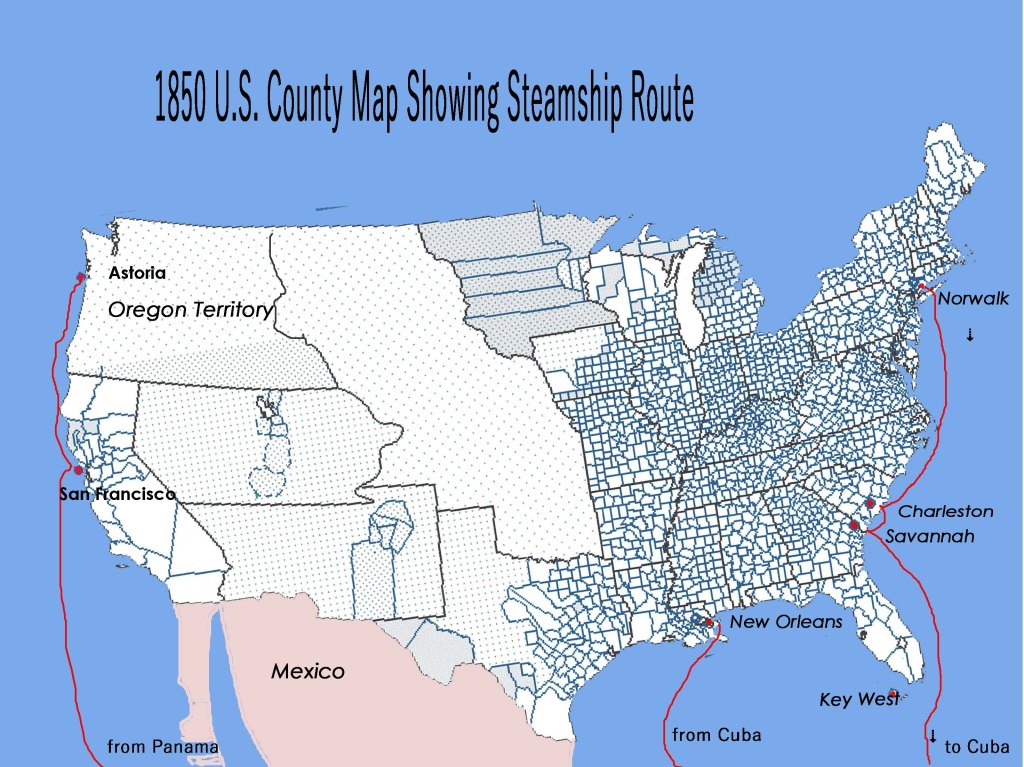
    The Fergusons traveled on a mail boat steamship. The Falcon was the one Thomas rode. This small steamship with Captain Thomson at the helm, was one of the three ships carrying U.S. mail as well as passengers on the Atlantic side of the Isthmus of Panama. The Falcon’s first trip between New York City and Charges, Panama happened in December of 1848 and took 26 days. The Falcon left New York City on December 1 and arrived in Charges on December 27. The route was New York to Savannah to Charleston to Havana to New Orleans to Chargres. It included mail pick-ups and drop-offs as well as passenger pick-ups.

    Here are maps showing the route.

    Around the time Thomas left Key West Florida for Havana, Cuba, he received this letter from his brother William E. Ferguson. It reads:

    Brother Thomas,

    I have thought it advisable to write you to give you the particulars brought by the Steamer Northerner from Chagres.

    I was conversing with a passenger who went from New York in company with fifteen others. They thought to get passage from Chagres but they found no opportunity to get from there. There is onboard three who bought steerage tickets in New York for $100.00 for each. One sold at Chagres for $450.00, one for$500.00 and the other for $700.00, and they state that there is 2500 persons on the Isthmus now waiting for a passage to San Francisco. My informant states that they think that there is a poor chance of the steamers returning from San Francisco and there is no sailing vessels at Panama. He states that he is going to New York to procure tickets if possible to go through, if not to write them to return to New York and proceed around the hook. I would advise you to go by land some route through Mexico if possible. I think we will get from here next week. They are getting every ready as soon as possible.

    Remember me to all friends.

    W.E. Ferguson

    Letters to Rosalinda

    Charleston April 5th, 1849

    The first letter Thomas wrote to his wife Rosalinda Corcoran Ferguson reflects what his brother William said.

    Havana, April the 8th, 1849

    I arrived here at 9 o’clock the next morning after I left home. I learn here that there are two thousand passengers at Panama waiting for passage. I think of altering my route to Vera Cruz and go through Mexico.

    The trouble with going through Mexico was that the United States had just won a war with Mexico, known as The Mexican War in the States and The American Intervention War in Mexico.  Mexico lost on third of its territory by the “Treaty of Guadalupe Hidalgo”. Traveling from Vera Cruz through Mexico, those Americans who chose to that way were likely meet angry Mexican citizens who would have no interest in aiding them and might even rob and kill them.

    In his next letter also written from Havana to his wife, he had changed his mind about traveling through Mexico.    He now planned to sail to Chagres on the steamer Falcon.

    Panama April the 22th, 1849

    Dear Wife,

    I write you once more from this place though I expected to leave here before this but receiving information from Vera Cruz not very favorable of the route through Mexico, I have altered my mind and shall go the way of Panama…  I expect I shall find my brother Daniel there if he has not got passage away which is doubtful. The steamer Falcon will be here on the 25th going to Chagres… Write me whether you heard anything more from Albert before he left Charleston.

                                     Thomas J. Ferguson

    On April 25, 1849, Thomas Ferguson left Havana on the Falcon heading to Chagres. He arrived in Panama City on the Pacific side of the Isthmus on May 9, 1849. Thomas didn’t mention how he got across the Isthmus after he landed at the mouth of the Chagres River.

    Up the Chagres River and on to Panama City

    The 60 miles between the mouth of the Chagres River and Panama City is challenging for most. It involved first chugging up the Chagres River in a small steamboat for 12 miles. Then the river became very shallow. Travelers boarded flat bottomed canoes called bungas which were poled or dragged by men. Clouds of mosquitoes, stifling heat and big alligators added to the atmosphere.  The passengers rode mules for the last 24 miles because the waterway ended at the very small village of Gorgona. Besides the discomfort caused by heat, reptiles, insects there were illnesses. People often caught cholera, malaria and yellow fever on this route.

    Daniel had a similar though longer journey as he had traveled from Norwalk Harbor. He arrived in Panama City before his brother Thomas.

    Letters to Rosalinda

    Panama May the 11th, 1849

    Dear Wife,

    I arrived here day before yesterday and shall leave day after tomorrow morning on the ship Norman in company with my brother Daniel, Stafford and Saywood and the rest of the Key West party who I have found here all well, all excited to get away to the Land of Promise. Daniel tells me he had a talk with fifteen young men who arrived here a few days ago on the steamer Oregon from California on their way home. They said they got as much gold as they wanted and were going home to enjoy it. They had got seven bushels of pure gold with them that they had dug themselves in the space of six months. Daniel says they told him to keep cool, that there was enough gold there for all…I have got my passage in a first rate ship by Daniel’s having a pass engaged for his brother-in-law who hasn’t got here yet.

                                                         Thomas J. Ferguson

    San Francisco- July 31st, 1849

    Dear Wife,

    I arrived here on the 15th of this month having sixty three days passage from Panama, rather a tedious  passage but well and hearty, the weather at sea was calm and sea very Smooth. On my arrival here Daniel and I took a small job which we done in a week for which we got five hundred dollars. Since then we have built us a boat to go up to the mines and intend to leave tomorrow. I was offered sixteen dollars a day the day I got here and refuse good jobs now to go up to the mines so you may judge what I think of the prospect. The gold stories we heard about California before I left home was no humbug. I have seen lots of the gold here, one lump weighing fourteen and half pounds. I don’t know as I shall find any of those big lumps but I am bound to have gold of some sort; there is plenty of it here and no mistake. This place is very healthy though cold. I have wore flannel shirt and drawer with my thick buckskin pantaloons ever since I have been here and then been cold with a severe wind from the sea like our Northers in Key West but back from the coast it is warm.  I eat apples, Pears and blackberries here. Some things here sell high, others very low .Clothing is cheaper than it is in the States,  flour $10, pork $25, beef $5,of the best salt, fresh beef from 12 to 18 cents a lb., potatoes $10 for a hundred lbs., onions seventy five cents a pound, cheese fifty, saleratus (baking powder)$2.50, butter $1.50, cheese fifty cents. This town is overrun with goods, the streets and yards full, lying about open, nobody steals. There ain’t a quarter stores enough to hold them. …

                                                                 Thomas J. Ferguson

    By October they were on the Yuba River prospecting and had made a claim. The Yuba River, located in the Sierra Nevada’s in northern California, is a major tributary to the Feather River.

    Uba (Yuba) River Calif. Oct 21st 1849

    Dear Wife,

    … I will now give you a statement of my success. After arriving here I spent a month in hunting, or prospecting as they call it here, up and down the river for a good place to locate. I at length found one which prove to be good on which my brother and myself built two machines for washing out gold and a water wheel to lift up water out of the holes we dig which works them all effectually so much so that we have made over five thousand dollars in the last three weeks…

    By a great odd we have got the richest spot I have ever seen on the river. It is a small bar on the side of the river in the form of a triangle about fifty yards on each side with rocks ten feet high on two sides and the river on the other. We have the whole of it to ourselves and nobody troubles us…

    I am faring very well here. We have got plenty of pork, dried beef, ham, flour, hard bread, beans, cornmeal, coffee, sugar, molasses, dried peaches and cherries. We get fresh beef every few days so we fare pretty well. I made some molasses cake this morning which went very well. It wasn’t quite as good as you used to make but it done very well.

    Albert is not here. We are looking for him every day. I have wrote letters directing him where to find us.                                                                            Thomas J. Ferguson

    Selling Goods to Other Miners

    Daniel’s and Thomas businesses have grown. They are buying more goods for sale to their fellow miners on the Yuba River. He writes to Rosalinda about this.

    San Francisco Feb 28th, 1850

    I am here now buying goods to take to the mines. Since I was here and wrote you, last, Daniel has been down and taken up $3000 worth of goods. Immediately on his return I came down again. We are selling a great many goods, as soon as I return now we shall start another store at Eliza Town on the Feather River at the head of Steam navigation. We purchased a lot there a few days since for which we paid six hundred dollars. We have been offered six hundred for one half of it. We also have another lot in the town given to us by the Proprietor of the town in consideration of our being the first who landed goods there from a steamboat… We have our own teams to haul our goods, eight mules and six horses, which we bought last winter when they were cheap. Now they are worth from two to three hundred dollars apiece.

    By March of 1850 Daniel and Thomas established two more stores and are buying a stock of goods large enough to have freight bills over twenty five hundred dollars. Daniel has taken charge of the mining and trading operations in Yuba while Thomas travels up and down the river to buys goods.

    In his April letter to Key West, Thomas said he had been to San Francisco three times buying about four thousand dollars’ worth of goods each time. Daniel worked on some damming projects to turn the river. Thomas also mentions three towns they had invested in, Elisa, Fredonia, and Lindd City. Could this be Linn City of Oregon, the town on the Willamette River where Daniel worked and lived when he brought his family west?

    Thinking of Home and Family

    Daniel and Thomas thoughts turned to home and family. In April Thomas writes, “I am beginning to like this country quite well. You needn’t think strange if I should be home this fall for you and Daniel’s wife and bring you out to this country.” Rosalinda answered this proposal in her May letter. She writes: “If you think that the place will suit me and the children I am willing to go any place under the globe to you. I’ve become acquainted with a fine Irish woman. She is willing to work and would be glad of the offer to go with me to California.


    In November of 1850 Daniel and Thomas were preparing to go home. They gave their wives December 15th as the date they would start back. Daniel and Thomas Ferguson had taken ample gold out of their mine. They also had sold many items to their fellow miners. Thomas and Daniel planned to return via Havana together. From there, Thomas would ship to Key West and Daniel to New York.

    The Ferguson brothers had done well.  A newspaper article from San Francisco states: “Thomas J. and Daniel H. Ferguson, from Danbury, Ct., have obtained $150,000 in gold dust by mining operations upon the Yuba River, during the past summer.” Using an inflation calculator this would be about $4,829,000 in 2018.


    Going back to the nursery rhyme “To Market”, the Ferguson brothers had certainly brought home the bacon. Their families would live high on the hog.

  • More Places

    week 27 Family Business

    Edward Griffin’ s Work

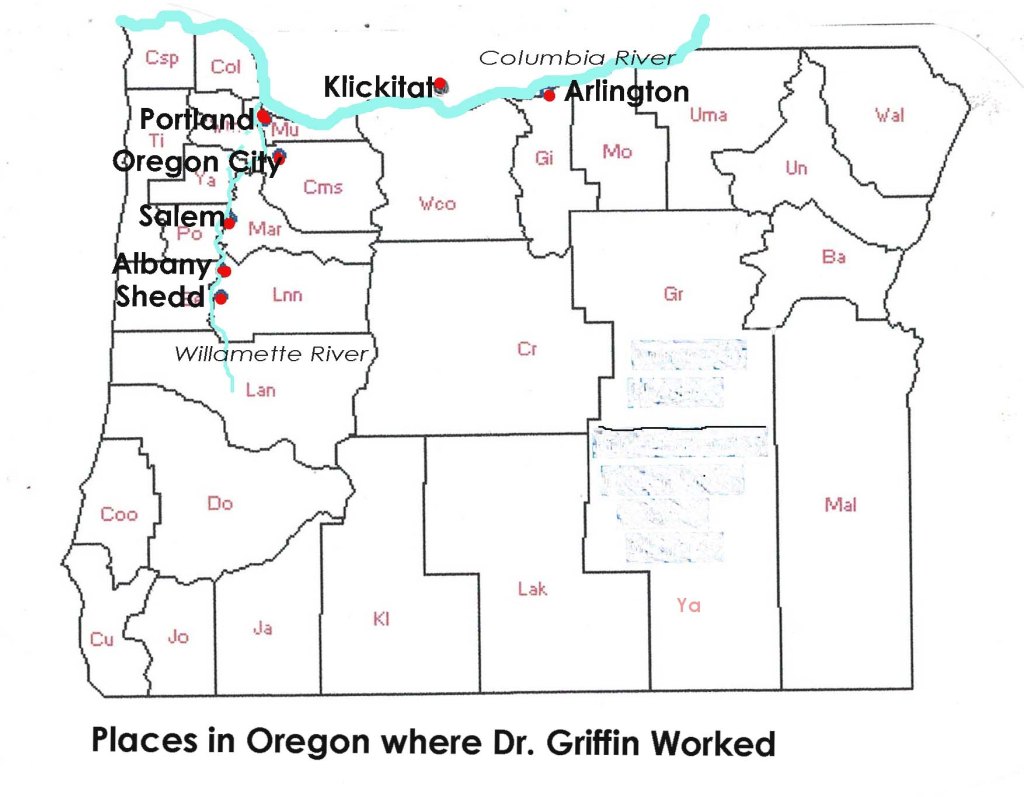
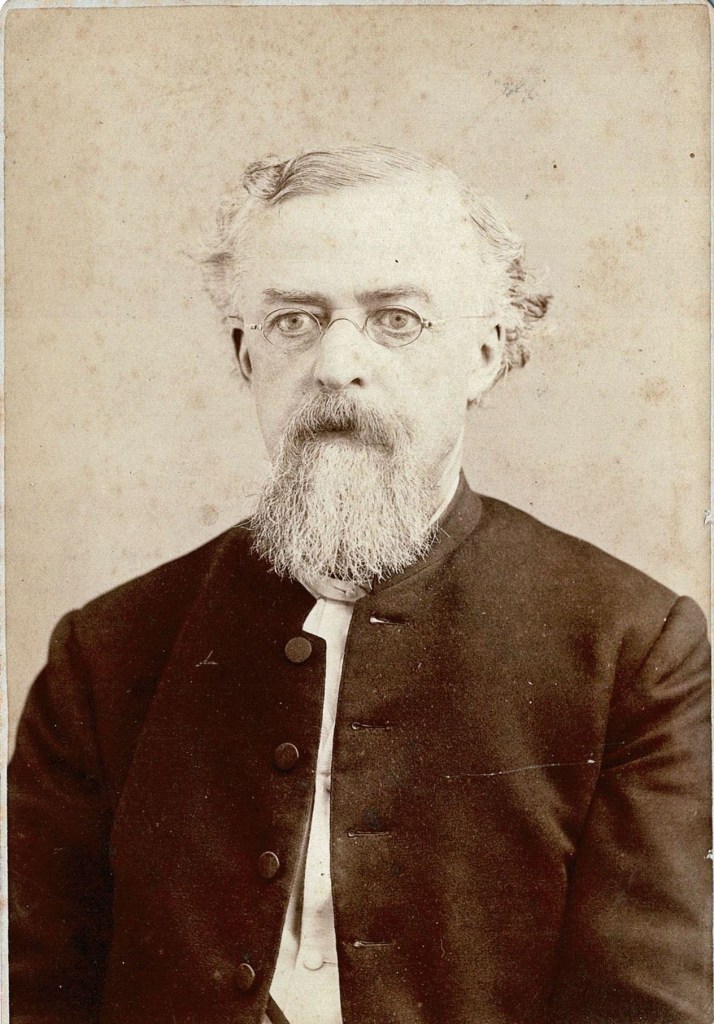
    Dr. Edward Henry Griffin, my husband’s 2nd great grandfather and the first dentist in Portland, traveled for his work. He also posted ads in local newspapers.

    On October 10, 1850, Dr. Edward H. Griffin posted this ad in the Oregon Spectator. This paper was the first newspaper printed west of the Rocky Mountains. The ad ran from October 1850 to July 1851. A transcript of this ad reads:

    Dental Surgeon

    Dr. E. H. Griffin offers his professional services to the citizens of Oregon City and vicinity. Careful attention will be given to all operations in his department of surgery. Cleaning, filling and extracting performed in such a manner as to give satisfaction, Also, teeth inserted on gold plate in the most substantial and tasteful manner.

    Office at Main-street House   Oregon City, October 10, 1850

    House in Portland- Office in Oregon City

    The 12 miles between his house in east Portland and his office in Oregon City could be done by horse. Edward was a good rider. But the trip by horse would have taken about two and one-half hours or more. In 1850 a steamboat, the Lot Whitcomb, ran from Astoria to Oregon City. Its top speed was 12 mph. This would have made it possible for Edward to get to work faster.

    Emily Helps Out

    An 1852 advertisement from the Weekly Oregonian gave the impression that Edward had an assistant. Edward used anesthesia in some of his procedures. Nitrous oxide or ether was available in the 1840s. He offered lady patients an assistant from his family to help them when they under anesthesia. In 1852, his family of two were himself and Emily, his wife.

    A transcript of this ad reads:

    Dentistry

    Dr. E. H. Griffin, Surgeon Dentist, offers his professional services to the inhabitants of Portland and vicinity. FILLING, CLEANING, and EXTRACTING, executed in the most desirable manner. ARTIFICIAL TEETH inserted on gold plate and made useful for eating. PIVOT TEETH inserted with wooden pivots, or with gold and wood combined. All Operations Warranted. Office or at his residence

    N. B. Ladies from the county, can be provided for in my family, while being operated for.

    Nov 22                                                                                                                        E.H. Griffin

    Emily Griffin Talks about Her Husband’s Dentistry

    Emily in an interview with Fred Lockley dated March 2, 1914. This interview was printed in the Oregon Journal, a Portland newspaper. Emily told of Edward’ s practice in Oregon City before a second dentist came to Portland, a Dr. Cardwell. Emily said:

    My husband charged $5 for pulling a tooth, $300 for a half set of false teeth, and $500 for a double set. In those days they did not have rubber plates on which to attach the teeth. They were fastened to gold plates. Dr. Griffin bought a rolling mill. I used to help him roll out the $50 gold slugs. We rolled them until they were as thin as a calling card. From three sheets of gold, he made the plates for the sets of artificial teeth.

    antique rolling mill

    Edward sporadically paid Emily for her part in the dentistry business. Here is what Emily said about that.

    In the early fifties (1850s) money was plentiful. Oftentimes my husband would throw a half dozen $50 gold slugs in my lap and say. “I had a good day today. There is your share.”

    Homestead in Linn County

    While still working as a dentist, Edward and Emily homesteaded land in Linn County, Oregon. He planted an orchard and raised Spanish cattle. This was between October 1852 and October 1860. Four of their children were born here on the homestead-Edward S., Hallock Augustus, Alice Mabel and Wilbur. Annie F., Hiram Edward, Charlotte and Ferdinand were born in Albany.

    Edward still did dentistry. Here is a schedule found in the Weekly Oregonian in 1857. A transcript reads:

    Dr. E.H. Griffin offers his professional services to the inhabitants of Portland and vicinity,

    Office, first door above 1, Snow & Co., upstairs. Will continue his operations through the month of December.

    Will operate in Oregon City from the 1st to the 12th of January

    In Salem, from the 15th of January to the 1st of February

    At Albany from the 24th of February to the 10th of March and from thence to Portland, where he designs locating permanently.

    N.B.—Advice given in all departments of his profession gratis.

    Nov. 27th, 1857

    In 1860, Edward was at his residence at Robert’s Bridge. Here is an ad giving details.

    Dr E. H. Griffin may be found at his residence, in Linn County, on Calapooia Creek, near Roberts Bridge until about the 1st of May.

    Albany, April 9, 1860

    In Albany from 1860 to 1883

    In 1860 Emily thought it was time for the older children to go to school. The Griffins moved to Albany, Linn, Oregon. Edward practiced dentistry in Albany for twenty-three years.

    According to the Albany City Directory for 1878 dentistry was not the only thing Edward did.

    In 1866, he was elected to the office of city recorder. That year he also gave $200 towards building the Albany Collegiate Institute.

    His dental office listing read,” Griffin, E.H., 65 West First, upstairs.”

    His residence listing read,” Griffin, E. H., Dentist, residence, SW corner, Seventh and Walnut.”

    In 1870 this family of Albany included Edward, dentist, Emily, keeping house, Hallock, 10, at school, Alice, 13, at school, Annie, 8, Hiram, 4, Lottie (Charlotte), 2. Edward and Emily had lost two children right after their move to Albany-their oldest Edward S. and their infant son, Wilbur.

    In 1874 they had another child. This one they called Ferdinand Corbett.

    More Griffin Dentists

    When Emily and Edward were first married, Emily was Edward’s assistant. Now Edward tried this with two of his children. One child eventually became a dentist and other married a noted Portland organist and became a singer.

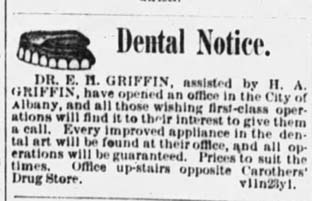
    In 1876 he ran this ad.

    H. A. Griffin, known to his family as Hallock, didn’t stay as Edward’s assistant. In 1876, he started running cattle in Klickitat, Washington Territory.

    The 1880 census for Albany recorded eighteen-year-old Annie Griffin, Edward’s daughter, as “learning dentistry”. She married Edgar Coursen in Portland, Oregon on 11 April 1883 and continued a singing career.

    Hallock ended up being a dentist after 10 years of cattle ranching. First, he married and started a family in Klickitat. He settled in Fresno, California. He became a dentist, first graduating from the San Francisco College of Science. The San Francisco Examiner carried an article, “Healing from Science”. It listed Hallock Augustus Griffin among those receiving their Doctor of Science degree in 1895.

    Emily and Edward live in Separate Locations

    Edward moved to Arlington, Oregon in the fall of 1883. He stayed there about 20 years. An article in the Condon Globe, dated 28 Oct 1892, places him there. It says.

    Dr. E. H. Griffin, Arlington’s popular dentist, gave us a pleasant call a few days ago as he passed through town…The doctor is one of the most honorable and sociable old gentlemen in the world, and has remarkable vitality for his age, 73 years.

    Emily also moved in 1883. She moved to San Francisco with Hiram, Charlotte and Ferdinand.

    But Ferdinand also lived with his father. In 1887, according to the Washington Territory census record there were Griffins living in Klickitat. This census listed Hallock Griffin now married to Annie and their children-Clifford, 9, Mable, 7 and Eddie, 5.

    Next listed are E.H. Griffin, dentist, 68, and F. (Ferdinand) Griffin, 13.

    Edward is presumed to be still working in Arlington. There was a steamboat route from Klickitat to Arlington.

    Edward Griffin as an Elderly Man

    In 1903, at the age of 84, Dr. Edward Griffin moved to St. Leonard, New Brunswick, Canada. This family story comes from a reliable source. His son-in-law, Edgar Coursen, gave a summary of Edward’s life in 1930. This summary by Fred Lockley was printed in the Oregon Journal on December 4,1930. This summary can be found near the beginning of my first blog about Edward Griffin called “A Matter of Place”.

    After returning from Canada, Edward spent some time with his family in California. On the 1910 Federal census for Berkeley, Alameda, California, both Edward and Emily Griffin were living with William and Charlotte Coleman. Edward and Emily are listed as father-in-law and mother-in-law to William Coleman.

    Edward died a year later September 1, 1911.

    I copied the details from a ledger titled” Records of Deaths, Portland “.  It was in volume 8 on page 152. I found this book in the record room of the Oregon State Archives in Salem, Oregon.

       The entry reads:

    Griffin, Edw, H., male, 91 years, 9 months, 21 days, nativity: New York, place of death: 658 Lovejoy, occupation: dentist, cause of death: hypostatic pneumonia, doctor: P.E. Hale, place of interment: crematorium, undertaker: E. Holmen

    The address, 658 Lovejoy, was the home of his son-in-law, Edgar Coursen and his daughter, Annie Griffin Coursen.

    Here is his obituary published in the Oregonian on September 6, 1911. Like most obituaries it has some false information.