To have an entire family group’s history laid out like the many dishes at a Turkish banquet occurs, but not often. For the Reynolds family, the stories were all there in Grandma Perritt’s scrapbook. I just provided the labels.
The family I am referring to is the Edwin and Margaret Reynolds family. I will focus on their children who included Bessie Reynolds and her siblings.
About a quarter of Frances Perritt’s holds newspaper clippings and photos of her mother’s siblings. Frances’s mother, Bessie Reynolds had six sisters and two brothers who lived to adulthood.
I have in my possession an 8” by 6” studio photo taken by Davies photo studio located on Third and Morrison Street in Portland, Oregon. It was likely taken in 1917 when Louis Reynolds was visiting relatives in Portland before he took a job in New York.
The Photograph
The photo is labeled on the back thus.
1st row L to R: Aunt Mamie, Uncle Louis, Great Grandmother Reynolds, Uncle George
I am confident one of Frances’s daughters labeled this photograph. I know this because of the relationships mentioned. Rose and Betty’s great grandmother, Margaret Ferguson Reynolds, in the front row is easily recognizable from her other photos. The aunts and uncles would have been great aunts and uncles to Rose and Betty.
In 1969, Millie and Mamie were still alive at the ages of 83 and 78. I remember meeting them outside Calaruga Terrace in Portland, Oregon when I was dating my future husband.
Because of Grandma Perritt’s scrapbook, I feel I knew these people. It has been an invaluable resource in my search for stories about the Reynolds, Cabells and Fergusons.
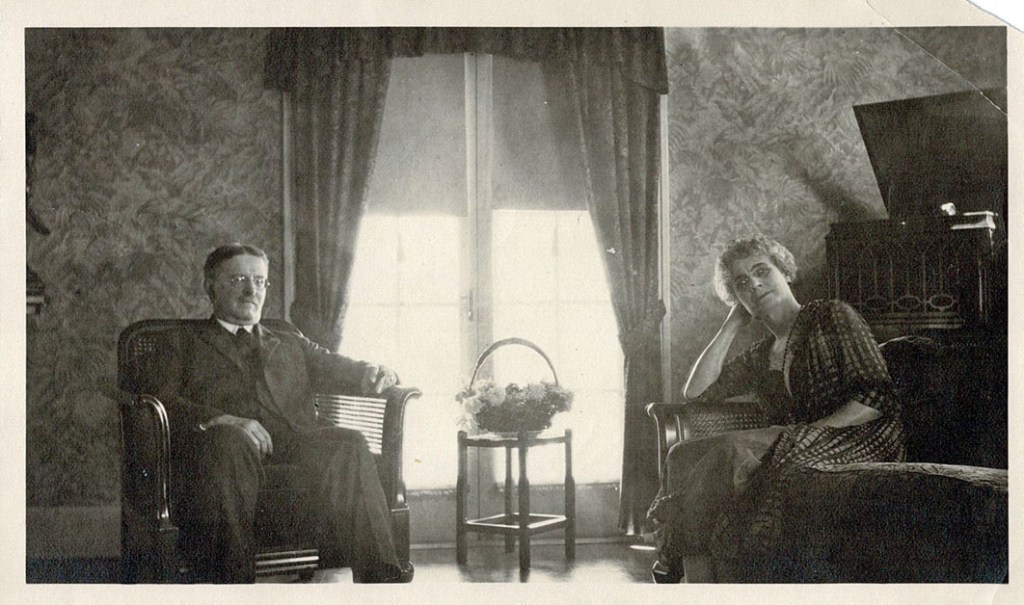
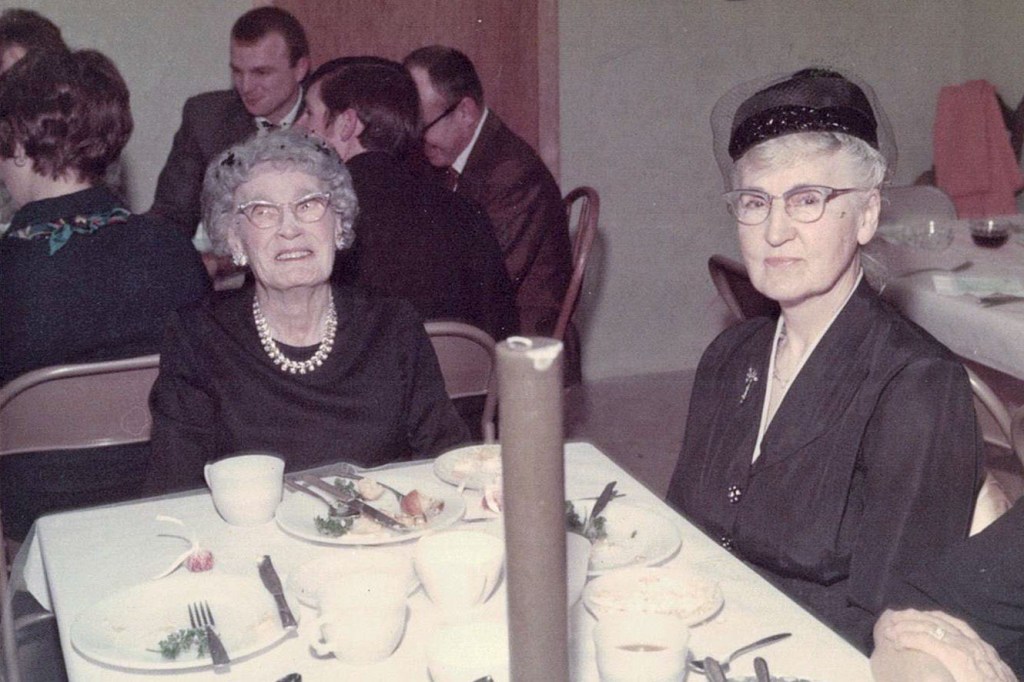
Mac Goughler and Bessie in living room of Portland home. Mac was Bessie’s last husband.
I met Great Grandmother Goughler and two of her younger sisters in the summer of 1969. This lady, Bessie Reynolds Cabell Curtiss Goughler, was the great grandmother of my fiancee, Craig Foster. The showing of my engagement ring somehow reminded her of the men she had loved and married.
Bessie said,
Do not to grow too attached to Craig as it has been my experience that husbands died. I found another. I married three and I outlived them all.
Later on, I lived part time with Bessie’s granddaughter, Rose Foster, while my husband served in the army. When the topic of ancestors came up Rose would talk about the Coursens and the Cabells. The Coursens were from her father’s side. The Cabells were from Frances Perritt’s side. She said her grandfather, Edgar Coursen played the pipe organ for 43 years at the First Presbyterian Church in Portland, Oregon. The Coursens did not drink. As for the Cabells and her grandmother Bessie, Rose said they made bathtub gin. I did not find this recipe in Bessie’s recipe book.
Bessie Cabell Curtiss Goughler’s Recipe Book
Among the family papers and other items, I inherited from Grandma Perritt was a loose-leaf leather receipt book. Bessie used it for a recipe book. Bessie typed the individual recipes into 3 and 1/2” by 7” paper stencils and mimeographed copies. Bessie wrote recipe for Plain Cake and her clear distinctive handwriting. Bessie had a stylized way of forming the number 2. She started out with a little loop. I know this because I have her letters and all the 2s have loops at the beginning.
As an illustration, here is her recipe for Plain cake written in cursive with a loopy 2.
Bessie’s Birth
Bessie, born to Margaret and Edwin Reynolds on November 30, 1874, in Baker City, Oregon, was a middle child. George, Addie, Frances and Bertha came before her. Margaret Stewart, Mildred, Louis and Mary Lydia came after her.
The Ferguson Family Bible entry for Bessie reads, “Bessie Ferguson Reynolds girl baby November 30th 1874.”
First Husband-John Breckenridge Cabell
Bessie Ferguson Reynolds married John Breckenridge Cabell on August 23, 1893, at 8 pm in the evening. The Ceremony took place in the Baker city Episcopal Church Rev. Isaac Dawson officiated. She was only 18 while John was 43.
John and Bessie had two children before John died on September 6. 1901.
The Next Five Years
The next five years treated Bessie poorly, ending with the death of her father, Edwin Reynolds on September 1, 1906. These years saw Bessie poor and living with family members in Baker City.
In March of 1904, she took her younger sister, Millie Reynolds, and her son, Rudy, to Portland, Oregon to look for work. In Portland, Bessie Millie and Rudy lived in a room located at 6th and Madison Street. This was not far from where Millie found a job at one of the oldest department stores in the west. This store, Olds and King, was located at 5th and Washington Street.
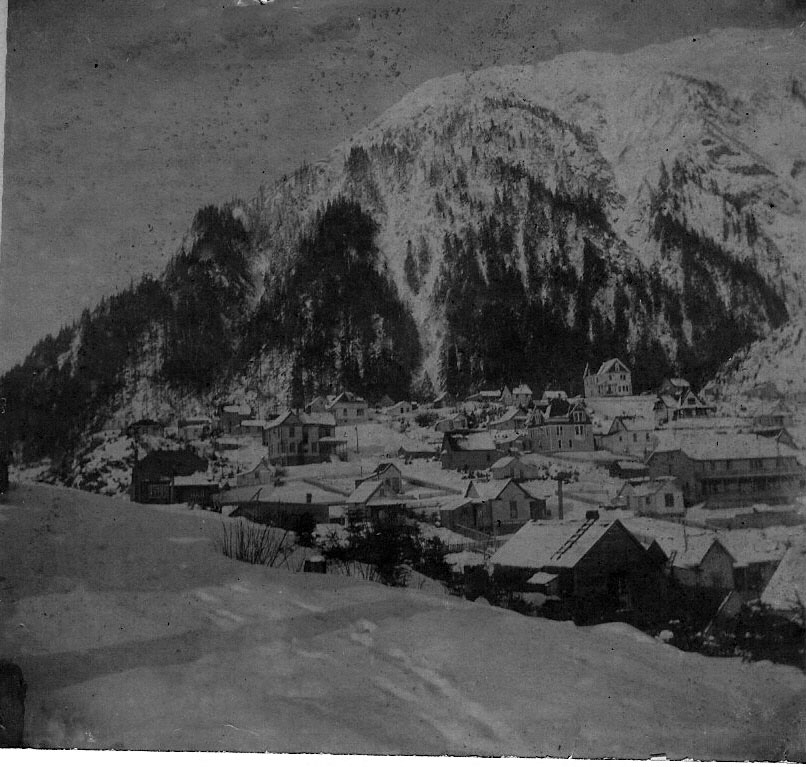
Her 8-year-old daughter, Frances Cabell, traveled to Juneau, Alaska, with another sister of Bessie’s, Margaret Reynolds Russell. Frances spent an adventurous 8 months there living with her Aunt Tootie and Uncle Ed Russell.
Second Husband—Arthur Marshal Curtiss
Shortly after the loss of her father, Bessie remarried. Arthur Curtiss, older than Bessie by 4 years, had worked as a blacksmith in Baker City.
Since they both lived in Portland they married in Portland on December 9, 1906. Here is a clipping from Grandma Perritt’s scrapbook.
Sadly, this marriage ended in 1916. Arthur died on April 26, 1916, in Portland, Oregon.
Hawaii
Bessie voyaged to the Hawaiian Islands in October of 1917 to see her first granddaughter, Rose Coursen. The 6-month-old Rose, the first child of Frances and Raymond Coursen, lived with her parents, on Maui Inland. Frances had married Raymond in May of the year before. Bessie spent 3 months in this scenic spot. Here she got to know her granddaughter before she returned to the mainland on January 19, 1918.
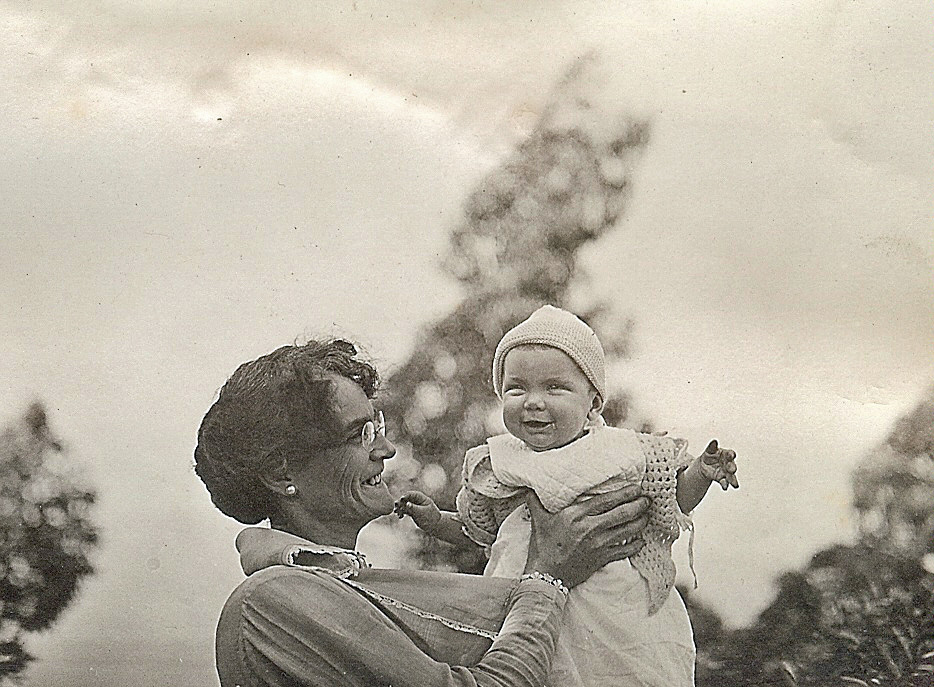
Bessie Curtiss and her granddaughter Rose Margaret Coursen
Third Husband–George “Mac” Goughler
In October of 1918, she married Mac Goughler, a printer in Portland.
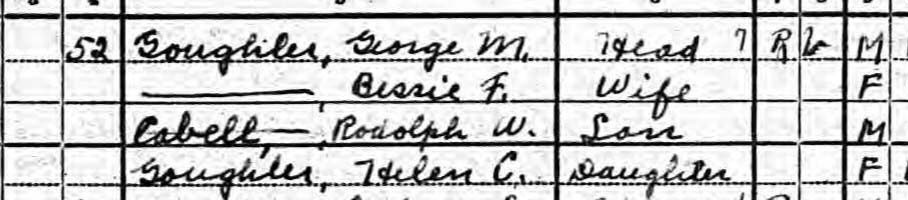
In October of 1918, she married Mac Goughler, a printer in Portland and the owner of The Daisy Press. Bessie was married to Mac Goughler about 30 years. The 1920 U.S. census records show George, Bessie, Rodolph. Helen, George’s daughter from his first marriage, was in this Multnomah County census record.
Mac died on January 19, 1950. This time Bessie did not remarry.
Last Year of Life
She attended our wedding event where her grandson and I were married in December of 1969. She died a year later on December 7, 1970.
A number of Frances Perritt’s relatives migrated to the Oregon Territory in the 1850s. The Isaac Roberts family, being among this group came west with Blunt’s wagon train of about 200 wagons. They traveled in what is known as a prairie schooner made of wood and covered with a canvas trap. Oxen pulled their wagon. When they began their journey in April, their family included Isaac Roberts, his wife, Katharine, and his children, James Bruffey, Emily Catherine and Samuel Houston.
From their home in Independence, Missouri, they anticipated a trip of about 2,000 miles. Isaac had not picked their final destination. It was to be either northern California to look for gold or the fertile Willamette Valley where they could make a donation land claim and farm. At the beginning of the trip, they were leaning toward the looking for gold opportunity.
Edwin C. Roberts, the grandson of Isaac’s, describes their journey as long and hard.
The original intention was to go to California but when they reached Eastern Oregon their stock was poor, their wagons were becoming worn out and all their equipment was badly run down, so they came on (to Oregon) and to The Dalles. General Grant, then a young Lieutenant at the time came out to meet the train.
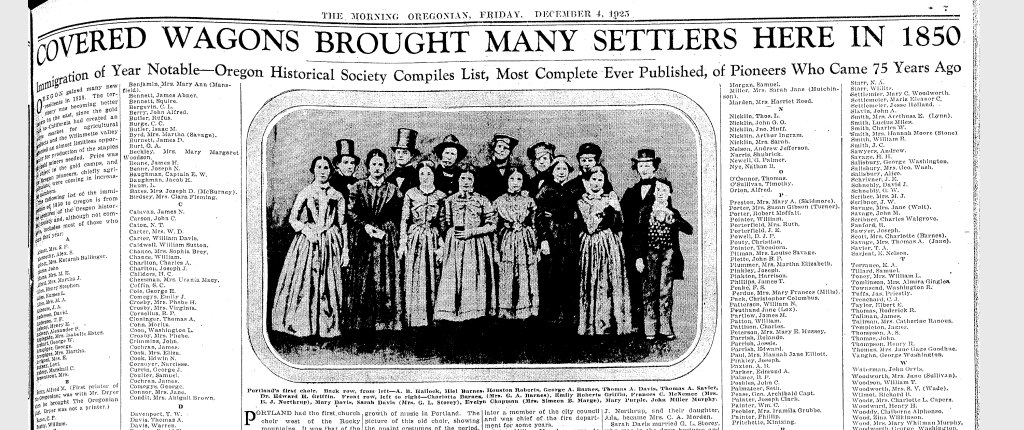
The Roberts were among the settlers who arrived in Portland in 1850. They are listed by name in this newspaper article.
The Morning Oregonian, Friday, December 4, 1925
Emily is listed with the names beginning with G as Griffin, Mrs. Emily Catherine Roberts. The others in this family are; Roberts, James B.; Roberts, Samuel Houston; Roberts, Isaac; Roberts, Mrs. Elizabeth (Connor).Elizabeth was substituted for Katharine in error in this article.
Time in Portland
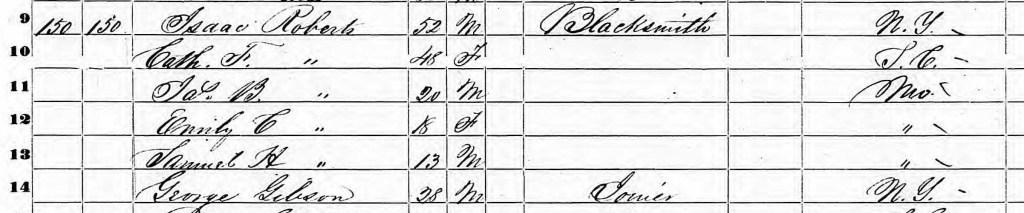
On December 9, the 1850 census was taken in Portland City, Washington County, Oregon Territory. The Roberts family lived in dwelling 150. Isaac is listed as a blacksmith. Here is a snippet of this record.
He made cutlery and edged tools. Earlier that year Isaac had purchased land from Colonel W. W. Chapman at the cost of about $800. These 5 lots were bounded by Fourth, Fifth, Columbia and Clay Street. This block is near to where the Keller auditorium is now in 2022.
He built the first house in this block during that winter. In 1850 a twenty-eight-year-old man named George Gibson lived with the Roberts. His occupation was listed as a joiner. Joiners fixed wood pieces together without using nails or screws. They often did finish work on houses – door frames, window frames, shutters, fireplace surrounds and built-in cabinets. Isaac’s house needed this type of work in the winter of 1850.
The Roberts helped build and attended the Taylor-Street Methodist Church. Emily, James and Robert sang in Portland’s first church choir. The choir was directed by Emily’s beau, Dr. Edward Henry Griffin. Emily and Edward’s wedding vows were exchanged at this church on October 26,1851.
To the Willamette Valley
In 1852, Isaac and Katherine moved farther south to the Willamette Valley. They took out a land claim near Shedd, Linn, Oregon. He settled at what is now called “Roberts Bridge” on the Calapooia, right in the center of the valley.
Robert’s Bridge, Linn County, Oregon
In the 1860 census, Isaac is listed as a blacksmith. It could be that more of his income came from his metal work than from his farm work.
When Isaac and Katherine left Portland in 1852, James Roberts and Samuel Houston Roberts came with them. They were still with them in 1860. James age 29, was a farmer and Samuel age 21,was a carpenter.
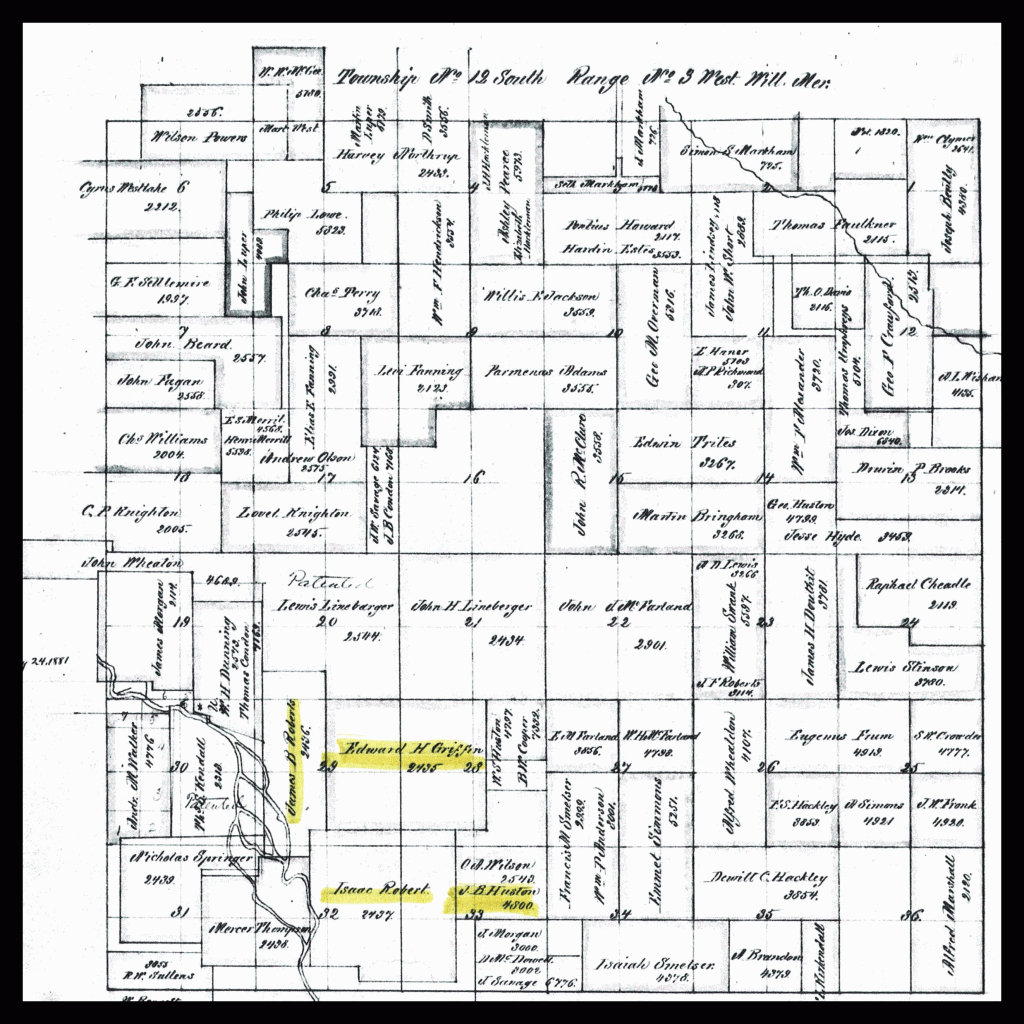
James farmed his own homestead of 320 acres. His claim adjoined his parents’ claim.
Emily (Roberts) Griffin and her husband Edward Griffin homesteaded a 640 acre claim next to her parents claim.
Emily had this to say about her family’s homesteading.
Father and mother took up a donation land claim 10 miles south of Albany and, they were anxious for us to take up a section also, so we moved to the claim adjoining theirs. My husband put out the first big orchard in Linn County. In those days raising Spanish cattle and wheat farming were about the only activities ranchers were engaged in. They had no gardens and rarely raised any vegetables. After nine years on our ranch, we moved to Albany, so where the children went to school.
Here is a map showing the boundary lines of Donation Claim Sections. This is original Plat on file in the Oregon City office of L. T. Bann, Register. The date was 24 Feb 1881. It shows Isaac and Katherine Roberts claim as well as James Roberts claim and Emily and Edward Griffin claim.
Map of Roberts Claim, bottom left
Death
Isaac died September 6, 1860, on his land claim at Robert’s Bridge, Linn, Oregon. His obituary published in the Pacific Christian Advocate reads:
Obituary-Died at his residence in Linn County on the 6th inst., (6 Sep 1860) d; Isaac Roberts, in the 63rd year of his age.
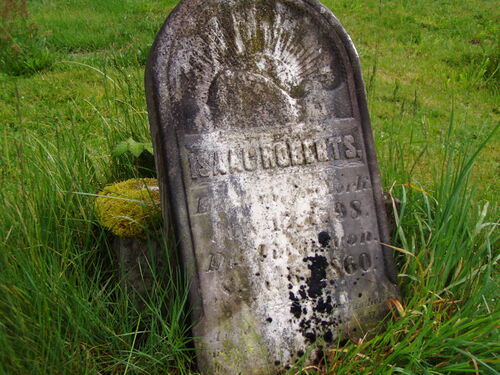
He is buried in Sandridge Cemetery located near Lebanon, Linn, Oregon, USA. his white marble head stone reads:
“Isaac Roberts; born in New York, July 17, 1798
Died in Oregon, Sept. 6, 1860,
A kind husband and loving father,
A friend to man, a believer in God and his revealed word.”
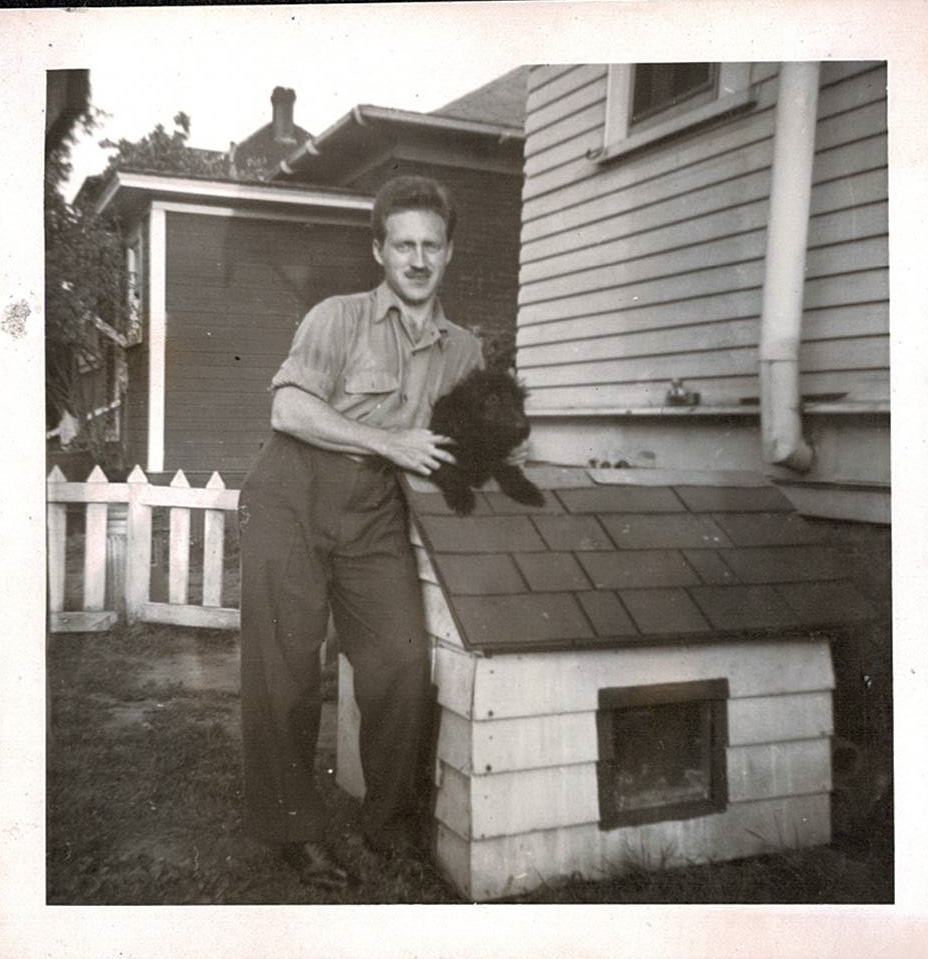
Howard Melvin Foster at Jefferson , Oregon in 1986
On the whole, Howard Foster did not display secretive qualities. He willing talked about any topic that came up. He answered questions about himself in detail. If he didn’t know the details he filled in the details. The only thing he knew about his birth grandfather father was the name, John Lawrence Shelton.
Howard Melvin Foster, a glass half full person, was my father-in-law. Also, he was Grandmother Perritt’s son-in-law. I spent some time with him and my mother-in-law, Rose. This was when my husband was in the army, stationed in Shemya, Alaska. My obstetric doctor practiced medicine in Portland, Oregon where my in-laws lived.
Being the positive person Howard was, he was not about to share the unhappy parts of his life. If something bad had happened he quickly forgot about it.
Being the nosy person I am, I asked questions about his life. If the event was good, I got detailed answers. If not, I got half answers.
Howard’s Brother Dick
Charles Richard Foster, his half-brother, was born three years after Howard. They were close while growing up. Charles or “Dick” as the family called him, grew up to be an alcoholic. Howard grew up to be a family man with a house in the suburbs, a business of his own, a loving wife, two sons and a dog named Eagle.
Dick, on and off the wagon, showed up at regular intervals, drunk and asking for money. Howard helped him until he broke with Dick when his boys were under five.
I asked what happened to Dick. Howard said he thought he died sometime in the 1950s and his family lived in Silverton, Oregon. Years later, I was searching for a Charles Richard Foster and found him in a Silverton Phone Directive for 1997.
Dick Foster, Spokane, August 1943
Early Life
A wild story about Howard’s early life came from his half-sister, Jean Wardian. How Howard came to have a half-sister, and two half-brothers is a different story I will tell now.
Edna Naomi Miller fell in love with Carl Shelton in Portland, Oregon. They lived in the same Portland Ward. They were both in their early twenties. When Howard was born on July 31, 1914, in Portland, Oregon, Edna was 25 and Carl was 24.
Back to the wild story, the first part is true. Auntie Jean, Howard’s half-sister, said Howard’s small family moved to a small logging community in the northeastern part of Oregon. They moved to Enterprise and Enterprise is where Carl died and is buried. I found his grave in Enterprise Cemetery. He had died July 24, 1915, just a few days before Howard ‘s first birthday.
The wild part of this story involves the reason they moved. Jean said, “Carl’s parents were well off, well known in the Portland music scene and were trying to get custody of Howard.”
Howard Melvin Shelton at 3 months
New Father
Edna married again on June 10,1916 about a year after Carl died. Howard grew up knowing no other father beside Charles Wallace Foster.
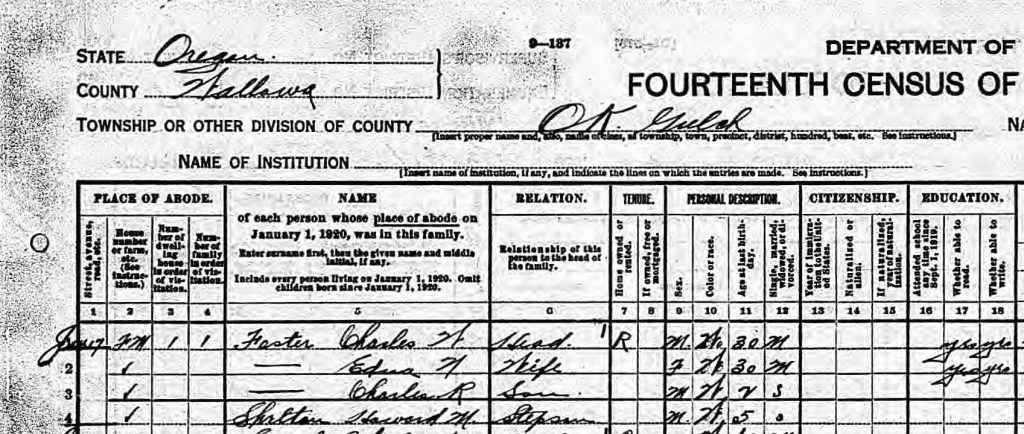
The Fosters used Shelton as Howard surname in the 1920 U.S. census. Here it is for OK Gulch, Wallowa County, Oregon.
1920 census showing Charlie Foster’s Family in OK Gulch, Wallowa, Oregon
Using Foster as His Surname
After Howard started school in Lewiston, Idaho, he used Foster as his last name. Here is the 1930 U.S. census from Mount Pleasant, Skamania, Washington.
1930 census showing Charlie Foster’s family in Skamania county, Washington
A Problem Develops Later in Life
In 1963 Howard needed a name change. He went through the Multnomah County circuit court system to change his name. His birth certificate named him Howard M. Shelton. In life people and institutions call him Howard Melvin Foster.
He graduated from Fort Vancouver High School as Howard Foster.
He studied for four years at Reed College as Howard Foster.
He married Rose Coursen on June 3,1940 as Howard Melvin Foster.
His two boys carried the surname of Foster.
His printing business was called Balwin-Foster Printing Co.
As a scout master from 1961-1965 he was known as Howard Foster.
He served his country in WWII and separated from the army as Private First-class Howard M. Foster.
I don’t know the immediate reason he needed to do this in 1963. I do know his church was planning a group trip to Israel and Rome. Howard would need a passport for this trip and a birth certificate with the name he had used for 45 years.
Certificate of Change of Name
On April 2, 1963, Howard Melvin Shelton, on his own behalf, petitioned the Circuit Court that his name be changed from Howard Melvin Shelton to Howard Melvin Foster. On April 29, 1963, his name was changed, and an official Certificate of Change of Name was issued to Howard.
Going Ahead to 1972
Moving ahead, I spent more time with my in-laws in Portland waiting for the baby. During my last month of pregnancy, my obstetrician wanted me to cut out my trips between Seattle where my parents lived and Lebanon where my grandmother lived. Being consigned to Portland, I had more chances to ask Howard about his life. He didn’t want to talk about his experiences in WWII.
Years later, going through Howard’s papers, I found his separation papers containing a summary of some of what he did. I was impressed. I don’t know if he didn’t talk about this last assignment because he didn’t want to, or he wasn’t supposed to. Here is the quote from his separation papers.
Title-Description-Related Civilian Occupation
Master, Ship: Served with 329 Harbor Craft in European Theater of Operations. Served aboard General McNarney’s private yatch. Was second in command of the boat. Drew all rations and supplies to be used. Acted as purchasing agent and bought on the civilian market. Supplies to be used that couldn’t be secured through the army.
At the time Howard was the Ship Master of this yatch, General Joseph T. McNarney was commanding general of the United States Army Forces, Mediterranean Theater. Howard separated from the army on March 17, 1946.
Howard Foster, center and army friends oversea on leave in France. Taken in 1944 or 1945.
Granddaughter
Then my daughter was born on a hot day in August of 1972 in Portland, Oregon. The grandparents had time to bond strongly with this new human.
In February of 1973, my husband came home from Shemya, Alaska. Soon after we headed to Fort Devens, Massachusetts where my husband finished his enlistment.
The grandparents were grieved with our going. This suggests the emotions in the family legend of Howard’s parents taking Howard away from his grandparents about 58 years ago.
We did come back to Oregon, living and working about 50 miles south of Portland. Howard and Rose attended their granddaughter’s wedding in 1998.
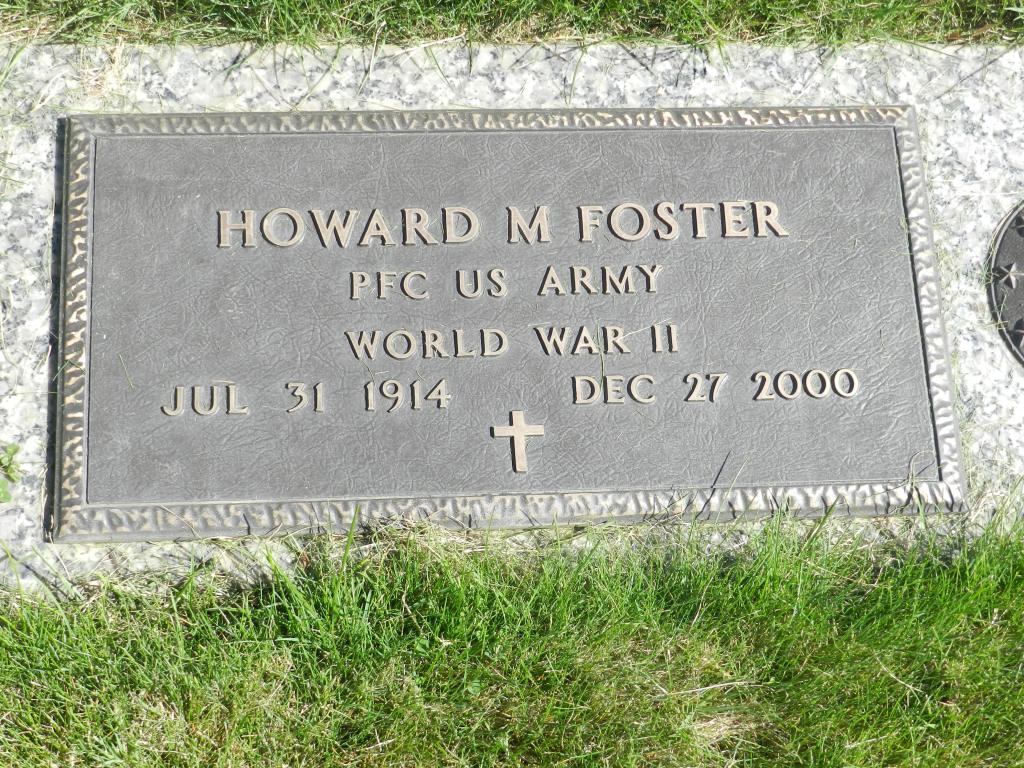
Howard died on December 27, 2000, in a care home in Portland, Oregon. We buried him in Skyline Memorial Gardens in Portland, Oregon. He has a flat bronze veterans headstone marker.
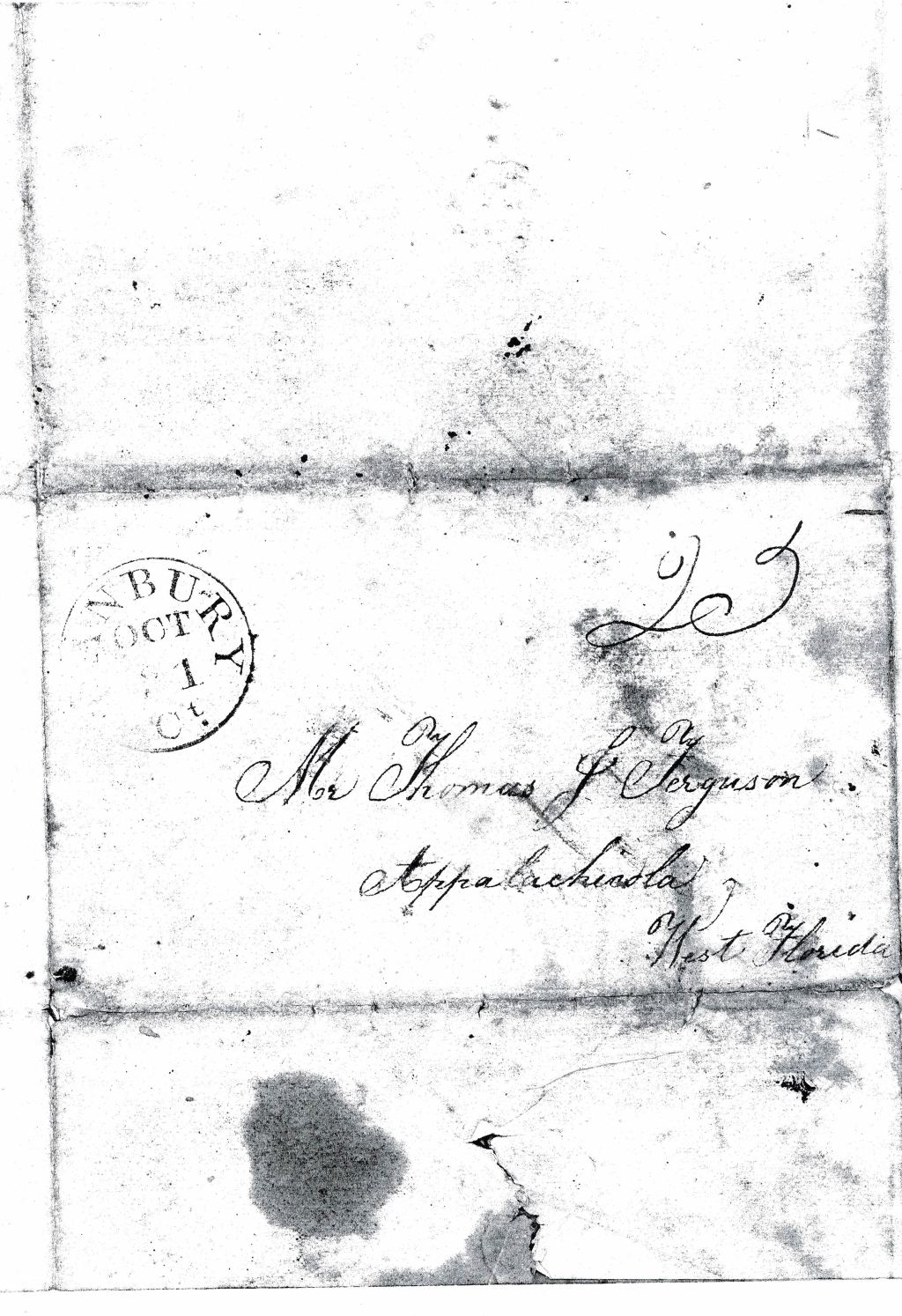
About 30 years ago when Tom Hambright was working as a curator for the Key West Art and Historical Society. He found some old letters Ferguson letters written in 1849 and 1850. In 2012 Mary Haffenreffer transcribed most of these letters. She published them along with her research about Ferguson family in the Florida Keys Sea Heritage Journal, Fall 2012 and Winter 2013. She sent me a copy of an earlier letter from Fanny Howes Ferguson to her second son Thomas Jefferson Ferguson. Thomas was living in Key West Florida in the 1840s. Fanny’s letter mentions 10 her children, informs Thomas of his upcoming sister Elvina’s wedding and mentions his cousin Cornelia Howes Higgins, daughter of Malchus Reed Howes.Fanny was planning the wedding of her oldest daughter, Elvina, to James P. Sanders and thinking about how much she wants Thomas and all her other sons to be there. Thomas is living in Key West, Florida a long way from Danbury, Connecticut where Fanny lives. In this letter, she gives news about Thomas’s other siblings- George, Daniel, Isaac Reed, Albert, Fred, William, Fernando and his two sisters Elvina and Fannie A. She mentions her husband but not by name. She writes:
Danbury Oct 29th 1840
My Dear and long absent son,
In the silent hours when labors and care is laid Aside and the rain pouring down in torrents I take up my pen to inform you of this situation of our family which perhaps never will interest no one but you. We have only 2 sisters left with us. George took Fernando last march to live with him till he is a man. George with his wife and 3 children and Fernando made us a long visit last summer, Daniel his wife and one child visit us frequently, they live in Norwalk. Fred & Elbert has not visited us this year, William lives in Miltown [apprenticed] to Mr. Crosly learning the shoemaker trade, he come to see us, and I regret to think that I can’t have it to say that Thomas visits us too, but you are separated far from us in a country where you are surrounded I fear with Indians, I frequently see accounts of their [?] in Florida, and it makes me shudder for fear I shall find your name among the sufferers, but you grant that I never may, I do feel to hope that you will someday come to visit us, last summer we looked forward with bright hope, and begun to anticipate the day when we should embrace you but going to the post office I found a letter there, which told us we must suspend that hope for one year, which caused tears to flow but was glad that we could hear particulars from under your own hand, of your business and situation, and that you intended to come Another year, it would be very pleasant to us, and no doubt it would to come if you could be here on the 19th of next month which is Thanksgiving not only thanksgiving but wedding day, tis expected that Elvina will be married on that day to James P sanders, I expect our relatives all will be present and you are respectfully invited to attend(Elvina would like some of your Figs to treat her company with) Reed and Lydia A Lewis are chosen to stand up with them, you are perhaps would like to hear something about James, suffice it to say we are all pleased with him. We live where we did last year and your Father works at the hatting business, and is doing well, his health is good, and he is quite a reformed man, in the land of civil habits, I wish you to write as soon as you receive this and let us hear how you got along this summer. I hope you will not stay there and expose your life [?] and you all to the massacre of Indians, do come where you can lie down to sleep and not be in danger, this leaves us all well, our friends and relatives likewise. Cornelia Amanda Higgins with her little son 16 months old has visited us this summer, also her step mother from mobile, they met in New York and was to your brother George’s together, the evening is far spent and I must draw to a close but not till I tell you that Alan Percy is married to Deborah Ann Heveland little you gave my love to Betsey, your housekeeper, and tell her I want she should look well to you and except for yourself the best wishes and prayers of your mother. Fanny Ferguson
Fanny and Nathaniel
Fanny and Nathaniel married in Fanny’s hometown of Southeast, Putnam, New York on March 16, 1811.
They called their first son George Washington Ferguson; the second they named Thomas Jefferson Ferguson. For the third son they used a typical Scottish naming pattern. They named this one for Fanny’s father, Daniel Howes. Their third son was called Daniel Howes Ferguson. When the gold fever struck- four of Fanny’s sons wanted to go. Thomas, Daniel and Albert journeyed to California to find gold. Only two returned, Albert died in San Francisco.
Less than a year after Fanny wrote the letter, Nathaniel died at their home in Danbury. He died on November 9, 1846 in Norwalk at the age of 70. Only her youngest daughter, also called Fanny, was still at home. Fanny A. was 8 when Nathaniel Ferguson died.
Road Block
Fanny and her daughter, Fanny A, lived in Norwalk, Fairfield, Connecticut in 1850. This is where I found the surname, Meeker for Fanny.
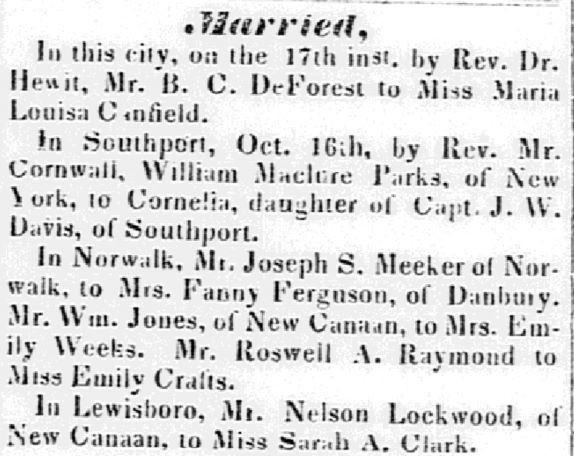
Several years later, I found a marriage announcement in the Republican Farmer, aConnecticut newspaper.
On October 15, 1843, in Connecticut, USA, Mrs. Fanny Ferguson married Joseph S. Meeker. Above is an 1843 news clipping from the Republican Farmer referring to Fanny and Joseph’s marriage in Norwalk. Joseph died November 2, 1846 in Norwalk, Connecticut.
She was still using the last name of Meeker in 1870. She lived with her sister, Esther Ryder and her brother-in-law in Danbury. Fairfield County, Connecticut. Here is a snippet of the 1870 census for Danbury.
A final Trip
Fanny died April 30, 1879 while visiting her daughter Fanny A. Stewart in Davenport, Iowa.
I found an envelope glued onto a page of Grandma’s Perritt scrapbook soon after the scrapbook came into my possession. The envelope, labeled Wesley Papers, contained an affidavit from Rulough J Dutcher. The affidavit was typed on yellow paper and copied from the original. Finding this thrilled me as this was oldest paper in Frances’s scrapbook. The original bore the date August 25, 1879 and location of Otsego, New York. It starts like this.
Summary
I, Rulough J. Dutcher, of the village of Richfield Springs in said County, certify and declare, that I am the only survivor of the children of Cornelius Dutcher. I was born at Granville in Washington County in the state of New York, and am now sixty nine years of age. Mary Dutcher, a daughter of my father by a former wife was ten years older than myself.
He goes on to said the Dutcher family moved to Cherry Valley, Otsego county in 1820. Mary married Smith Reynolds here in 1822. Smith Reynolds died in 1826, after which Mary traveled to Albany, New York to live with a sister. Mary meet James Edwin Reynolds, a widower, in Albany. They married in February of 1834 and came to Cherry Valley where Mary had two children. Her son, Edwin Wesley was born in October 1837.
How James Wesley Left Mary Dutcher
The surprising part of this story is that James wasn’t there for the birth of this son, Edwin. By the summer 1837, James lived in Canada with his new wife, Lucy Pennell.
The oldest son of James Wesley and his third wife, Alfred Z. Wesley wrote to Bessie Reynolds Cabell Curtiss in 1912 telling her something about why James E. Wesley left Cherry Valley, New York. He wrote:
Mr. Dutcher (Rulough) must have made a mistake in dates (the date of Edwin’s birth in 1837). Father (James E. Wesley) told mother that he had trouble with this man Dutcher, and he left there (Cherry Valley). They were in the blacksmith business, and Dutcher was cheating him.
Rulough Dutcher did make a mistake the birth order of Edwin’s and Mary’s children. Their daughter was born first. Later census reports (1860, 1870, 1880 and 1900) are consistent with the year 1837 being the year of Edwin’s birth. The 1840 U. S. census reports that Mary Wesley had two children under 5, a boy and a girl. Assuming these children were born two years apart, their births would be in the 1835 to 1837 range.
In this same letter from Alfred to Bessie Alfred wrote of his father’s marriage to his mother.
…Now dear, my sister has my mother’s marriage certificate where she was married in Mill Village, Queen’s Co., Nova Scotia, by Rev. Moody, pastor of the Episcopal Church of Liverpool, N. S., on the 3rd of July, 1837 and on the 12th day of October,1838, I was born. The Rev. Moody christened me and was my God father. He lived to be 95 years of age, and I remember him well. After me came five sisters, Emma, Ellen, Cassie, Jessie and Fannie. Father’s son by his first wife was Friend Charles. Wesley and his daughter was Merceilla. My stepbrother and sister were born in Albany, N. Y. His first wife was Nancy Smith, a native of Macclesfield Eng. We are directly descended from the Rev. John Wesley in America. Father had a heavy scar on one side given by his brother John when boys with a hatchet. My brother (Friend Charles Wesley) died in Halifax when I was 9 years old and Merceilla in 1875. Hoping these lines will find you all well, and with love to mother (Margaret Reynolds) and all my nieces and nephews. I am your loving old Uncle T. Alfred Z Wesley.
So, James Edwin Wesley married Lucy Pennell in Nova Scotia. Edwin Wesley was born in Apple Valley, New York 3 months later.
I don’t know why James Wesley left Mary Dutcher Reynolds Wesley in the short time before Edwin’s birth. As a result of this abandonment, Mary went back to using her first husband’s surname, Reynolds. Edwin Wesley became Edwin Reynolds.
Oregon
Little more is known about Edwin’s early life. We know he came to Oregon in 1856 at the age of 19. He spent three years steam boating on the Columbia traveling between Portland and The Dalles.
Eight years later, Edwin Reynolds married Margaret St. John Ferguson at the Portland home of the Daniel Ferguson family. Her mother, Jeannette, and her brother, James Ferguson, were witnesses. March 2nd was the day. The Ferguson family bible records it this way,
Edwin W Reynolds and Margaret were married in Portland, Oregon the year AD 1864 by the Rev Mr. Cornelius, a Baptist minister.
First Home
Margaret and Edwin moved into their first home in Auburn shortly after they married. During the first few years of their marriage Auburn was the largest town in Eastern Oregon. It was the first county seat of Baker Country. Edwin Reynolds ran one of the twenty stores here, a Hudson Bay Company store. Their home was one of about a thousand which dotted the landscape around this booming gold mining community.
Two children were born to the Reynolds while they lived in Auburn. George Putnam Reynolds was born on October 15, 1864, at Auburn. Addie Jeannette Reynolds was born October 15, 1864, in The Dallas, Wasco County, Oregon.
Shortly after Addie’s birth the Auburn gold mine pinched out. The family moved to the nearby town of Baker City where they settled and raised their family.
Baker City
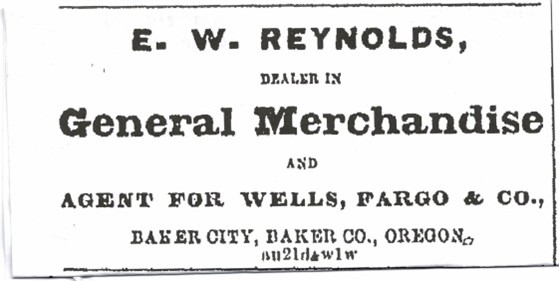
Edwin’s first business in Baker City was an express office. He ran this ad in the Oregonian for between 1867 and 1872.
Miles F. Potter in his book about early gold mining in Oregon listed some of Baker City’s first business establishments. One was Reynolds and Ferguson’s express office.
The Wells Fargo part of Edwin Reynolds express business involved gold dust and mail. Baker City, a mining town, needed employees who would handle robbers. Another part of this job was exchanging, storing and transporting gold.
In 1874, Edwin served as city recorder, filling out the term of W.J. Eastabrook who had resigned. The next year Edwin lost his city recorder post to J. M. Shepherd even though the editor of the Bedrock Democrat supported him and wrote, “Mr. Reynolds is a good scribe and a first-rate accountant”.
In 1887 the Baker City water committee undertook solving the problem of supplying water to the town. In November of 1889, Edwin Reynolds was appointed water superintendent and held that position until 1891. At the end of this appointment Mayor McCord addressing the city council said this in thanking Edwin.
Our city water system is not on a paying basis (there were no charges for water). We have good wells, reservoir, pump, boiler and appliances; also, about 7 ½ miles of water mains and 71 fire hydrants.
Children
Edwin and Margaret had seven more children. They were Frances, Bertha, Bessie, Margaret Stewart, Mildred, Louis and Mary Lydia.
The Chilling End
The abrupt end of Edwin’s life came as a shock. This event at the end of Edwin’s life shocked Oregonians as this event was widely reported in the papers.
At the Oregon State Archives in 2000, as I searched for Reynolds death records, I found Edwin’s. It listed the cause of death. “The cause of death was as follows: prussic acid poisoning(self-administered). Other information on this record is:
Place of death: Portland, 362 Third; Married; Father, Jas. Edwin Wesley; Father’s birthplace, England; Maiden Name of Mother, Dutcher, Date of Death, Sept 1, 1906; Burial Lone Fir Cemetery; Date, Sept. 4, 1906
Afterthought
Edwin had been ill for at least 3 years. He and Margaret had recently moved from Baker City to Portland, Oregon. They lived at the Iris Hotel where he died.
Edwin thought he had liver disease. He had watched his son-in-law die a slow death of this illness in 1901. He did not want the same ending.
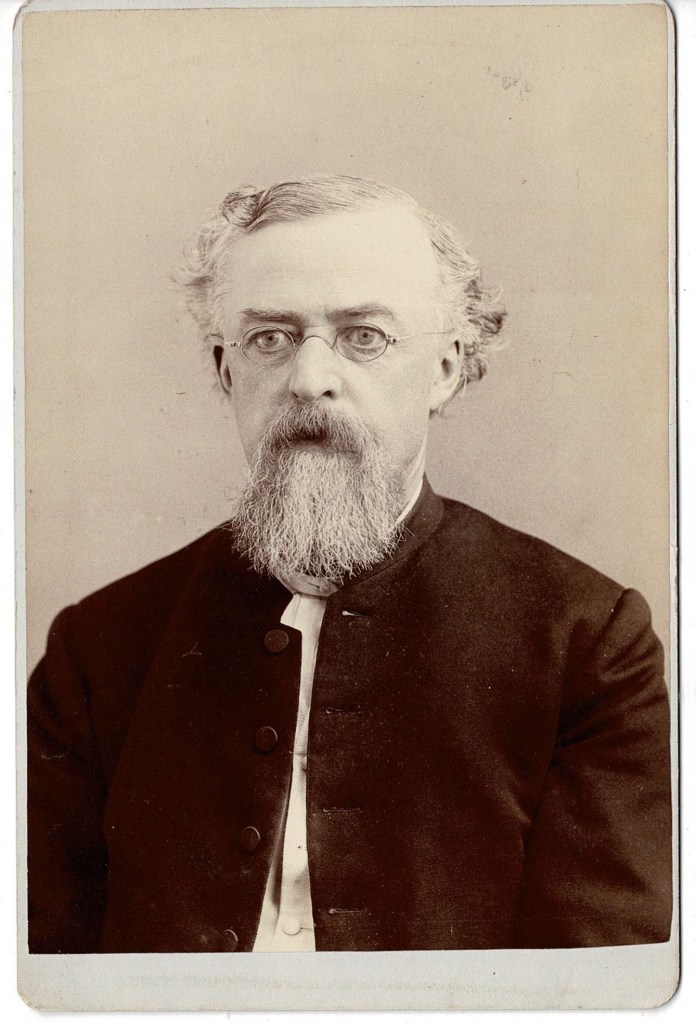
Edwin Wesley Reynolds was a hard working, intelligent, civic-minded family man; but he was not patient.
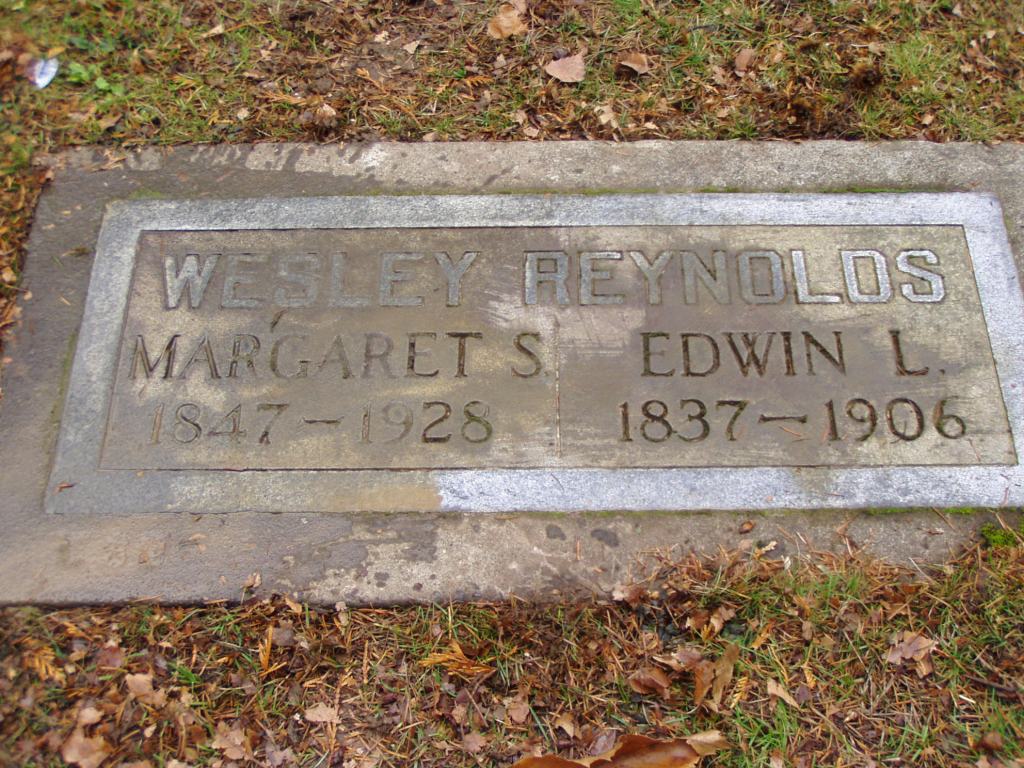
Taken on 23 December 2010 at the Lone Fir Cemetery in Portland, Oregon
To carry the nickname “Tootie” seems paradoxical for this Alaskan pioneer who with her former husband founded the Daily Alaska Dispatch, Alaska’s first daily paper.
Frances Cabell called Margaret Reynolds Russell, a sister of her mother, Aunt Tootie. When Margaret became Tootie to her family is unknown; it probably happened early in her life. She was born on April 5, 1877, to Edwin and Margaret Reynolds in Baker City. Her older sister, Bessie, who was born about 2 and ½ years earlier, would have been curious about the new baby. Maybe Bessie mispronounced Margaret’s name. More likely the delightful little noises the baby made caught Bessie’s attention and Margaret Stewart Reynolds became Tootie. As an adult, Margaret even signed her letters to Bessie as, “your loving sister Tootie.”
Juneau, Alaska
On February 15, 1898, Margaret Reynolds married Edward Crawford Russell in Seattle, Washington. As a result, she started going by the name, Mrs. Ed C. Russell.
In the same year, she and Edward “took a printing press to Alaska… and after issuing a weekly(newspaper) for a time, they bought another weekly in Juneau and published it as a daily. This paper, the Daily Alaska Dispatch, grew and thrived under their care. Edward was the editor, and Margaret took care of business details. In August of 1900 she traveled to Seattle to find a new foreman for the print shop.
Looking After Frances
Margaret and Ed did not have children of their own, but they did like children. In March of 1904, Margaret’s sister, Bessie, needed someone to look after her 8-year-old daughter, Frances Cabell. So, on March 3. 1904, this item appeared in the Daily Alaska Dispatch. It read, Mr. and Mrs. Ed. C. Russell returned on the Cottage. Miss Frances Cabell, a niece of Mrs. Russell, accompanied them to spend the summer in Juneau. Frances spent the spring summer and fall with her aunt and uncle in Juneau.
During the time Frances lived with her Aunt Tootie and her Uncle Ed, she wrote letters. She wrote to her mother in Portland and her uncles and aunts in Baker City. She wrote about her Aunt Tootie’s activities.Tootie washed clothes by hand, prepared meals, read the Dispatch and talked to neighbors and returning ship captains.
One thing Aunt Tootie particularly enjoyed was buying and wearing hats. She bought large hats with wide brims- hats that would add height to a woman’s frame as well as being decorative. Keeping one of these hats on her head was difficult. Often the hat needed to be secured with hat pins as long as 12 inches.
In late April, Aunt Tootie even bought Frances a hat which Frances promptly wore to church on Sunday.
Sometime in October of 1904, Aunt Tootie took Frances home to her mother in Portland. Tootie didn’t return to Juneau until December. An item in the Dispatch, dated December 6, 1904 reads,”Mr. and Mrs. Ed C. returned…Mrs. Russell spent the past two months visiting with relatives in Portland.”
Selling the Dispatch and After
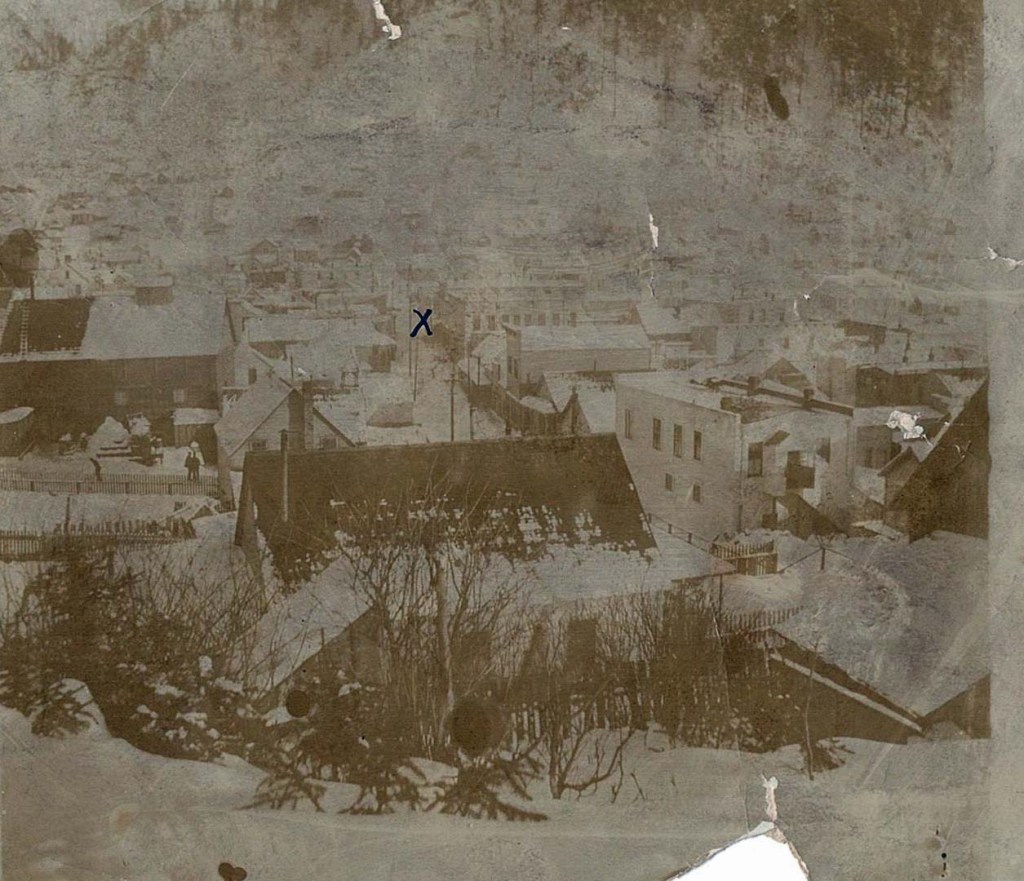
Two years after the Russells returned Frances to Portland, they sold the Daily Alaska Dispatch at a profit. Tootie sent a photo with a “X” marking the the spot where their newspaper office was located in Juneau.
After selling, they traveled and their marriage fell apart. Exactly when they separated is unknown.
In 1920, they lived separately. Ed lived in a boarding house in Seattle working as a journalist. On the 1920 census record he said he was married, so he may have remarried.
At this time, Margaret lived in Portland, Oregon. She was divorced and working for a printing company. Later, she would run a small job printing shop. She died March 13, 1932, at her sister, Addie Reynolds Mack’s house.
Remembering Margaret Stewart Russell
Some people remember Margaret as the young woman who went to Alaska near the end of the Juneau Gold Rush. The first daily newspaper in Alaska was successful largely due to her business acumen.
Frances remembered this woman as her Aunt Tootie who gave her as amazing Alaskan adventure. This Margaret with the ridiculous nickname of Tootie was someone the family put their arms around.
Frances Perritt labeled all photos of Margaret as “my Aunt Tootie.” She even used Margaret real first name for her first child-Rose Margaret Coursen.
In 1900, many family letters traveled between Portland, Oregon and Baker City. John Cabell received treatments in a sanitarium in Portland for a liver ailment. Bessie Cabell lived in Baker City with her parents and their two children.
In Frances’s Scrapbook and collections, I found these letters. The letters tell how this family struggled to get back to their mountain home. This home was where Bessie began her married life and where their children spent their first years. They had married on August 23, 1893 at St. Stephens Church in Baker City.
Marriage record for John B. Cabell and Bessie F. Reynolds
In the beginning, they lived in a cabin on a mountainside, high above the gold mining town of Granite, Oregon. This particular spot held a place in the hearts of the John and Bessie Cabell. They lived there during the mining season. In the off season they lived in Baker City.
Their Cabin on the Mountainside
The large Baker City house standing at 1325 3rd Street belonged to Frances’s grandparents, Edwin Reynolds and Margaret Ferguson Reynolds. This is where Frances was born on March 8, 1896. Her father, John Cabell owned and worked a silver mine, La Bellevue, with his brother, Frederick Cabell. La Bellevue Mine was located at an altitude of 7,490 Feet in the Blue Mountain range. The nearest town, Granite, was a few miles down the mountain and at the level of 4,675 feet. John, Bessie, Rodolph and Frances lived in a small cabin downhill from La Bellevue Mine. People who spent the winter here were often snowed in. They got their mail about once a month and ate a lot of beans. John had spent winters in the mountains; but Bessie had not.
Nell, the sturdy mare in the photograph, transported the family from their cabin to Granite. In Granite, they bought groceries, got their mail and used the phone at Granite Grand Hotel. This photo shows John holding their first child, Rodolph on Nell, the horse, with Bessie looking at them. Bessie’s sister, Frances Cooke, is standing in the back. This photo was probably taken in the spring of 1895.
Letters from John
Then a long illness triggered two stays for John at Portland Sanitarium before he died on September 6. 1901. John Cabell wrote often to his young wife, Bessie Reynolds Cabell, during his time at Portland Sanitarium.
In John’s letters to Bessie, he called his son “My Rascal Rodolph. He called Frances the “Baby”.
On June 29, 1900, John wrote, “Tell my little rascal Rodolph not to run his legs off because he can’t have his Papa when he goes to the mine. Tell the baby she must think of her Papa every day.
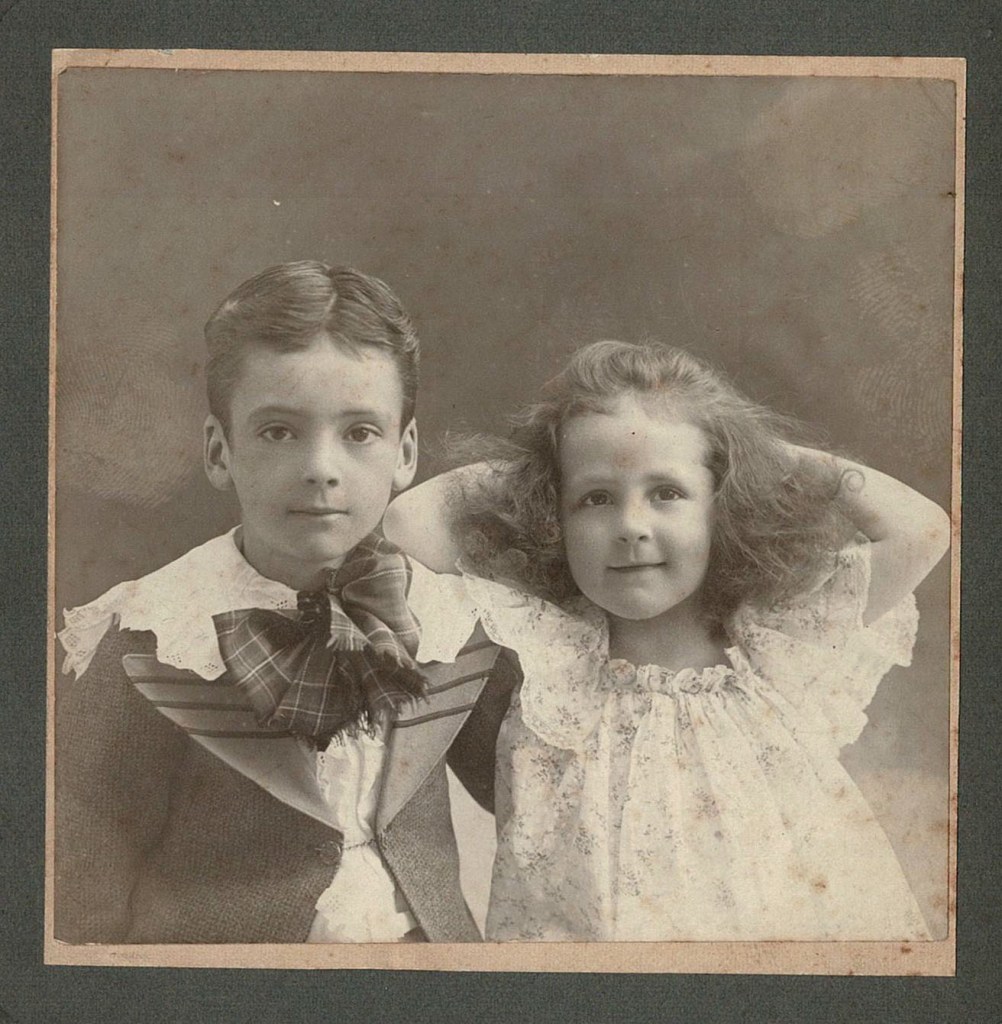
During his stay at Portland Sanitarium, Bessie sent him this portrait photograph of Rodolph and Frances. The portrait, made by Parker’s Studio in Baker City, Oregon, owned by Roland and Viola Hazeltine Parker. Viola’s father, Martin Hazeltine, was an extremely successful land photographer and traveled throughout the West. He settled in Baker City and set up a studio there.
Frances, aged 4, and Rodolph, aged 6, are dressed in bows and frills. Frances, with her naturally curly hair and square face, smiled a quiet little smile. When I first met her 70 years later, she welcomed me with that smile.
Papa Plans to Come Home
In his August 9, 1900, letter, John calls Frances his little girl. He writes, “Tell Frances I am going to bring her a rocking chair.”
John expressed his longing for home and family in every letter. He wanted it to be their mountain home uphill of Granite. He began buying and sending items home– overalls, boots, a warm coat for Bessie and a mackintosh for everyone. The mackintosh he sent for Frances dragged on the ground.
Bessie complained; John replied, “Hem it up.”
Meet Me in Sumpter
The trip back to eastern Oregon involved a train ride on the Oregon Short Line from Portland to Baker City. From there he would catch the Sumpter Valley Railway from Baker City to Sumpter. Bessie was to meet John in Sumpter, arriving in her horse cart pulled by their mare, Nell.
In 1900, the narrow gauge Sumpter Valley Railway carried people and goods from Baker City to Sumpter. Then it traveled beyond to Prairie City. The Oregon Short Line Railroad offered service between Portland, Oregon and Baker City.
John outlined the plan in his letters to Bessie. First he would take the train from Portland to Baker City. Then, from there he would board the Sumpter Valley train to Sumpter. This train, pulled by a steam powered locomotive, traveled 60 miles with many stops. Sumpter where Bessie and the children planned to meet John, was about 29 miles from Baker City.
Many of John’s July letters gave Bessie directions on how to do this.
He wanted Bessie to practice driving the horse cart with Nell under the harness. He told her it would give her and the children a nice break from her parents. He reminded her Nell would need extra hay and oats for long drives and to hobble Nell at stops. Bessie found they needed a new cart and harness. They debated letting Bessie’s Eleven-year-old brother, Louis Reynolds, drive to pick up John alone and decided against it. Louis accompanied Bessie and the children to Granite on the first part of the journey to get John back.
They coordinated their arrivals through the telephone at the Grand Hotel at Granite and telegrams to Baker City. With the repaired harness and the new cart, they did it. The last 1900 letter from John sent from Portland Sanitarium arrived August 11, 1900. It was addressed to Mrs. J. B. Cabell, Granite, Oregon. Bessie had made it to Granite.
Mistake in the 1900 Census Numbers
The first time John was counted was at the Portland Sanitarium in Portland, Multnomah, Oregon. The date on this record is June 14, 1900. One of John’s earlier letters from this institution to Bessie is dated June 7, 1900. So, it would seem, John entered Portland Sanitarium in early June.
On June 18, 1900, Charles Stuller, enumerator for the 1900 U.S. Census survey for Baker City, Baker, Oregon arrived at the door of Edwin Reynolds house on 3rd Street. Here he counted nine people. They were Edwin Reynolds, Margaret his wife, Louis, Millie, Bessie Cabell, John her husband, Grandson Rodolph and Granddaughter Frances.
Two days later, June 20, 1900, another census taker counted John, Bessie, Rodolph and Frances. This time they were in the Granite City District of Grant County, Oregon.
Sadly, John returned to Portland Sanitarium about eleven months later in July of 1901. In August, Bessie, Rudolph and Frances followed him and were with him when he died on September 6, 1901.
Afterward
In 1985, a grandson, the son of the one John called my rascal Rodolph visited the cabin on the mountainside. This grandson, Rodolph Cabell, Jr. took a photo of what was left of the cabin.
On the back of this photo, Rudy, Jr. wrote remains of cabin in which John Cabell and Bessie (his wife) lived.














 francescabellcoursenperritt.com
