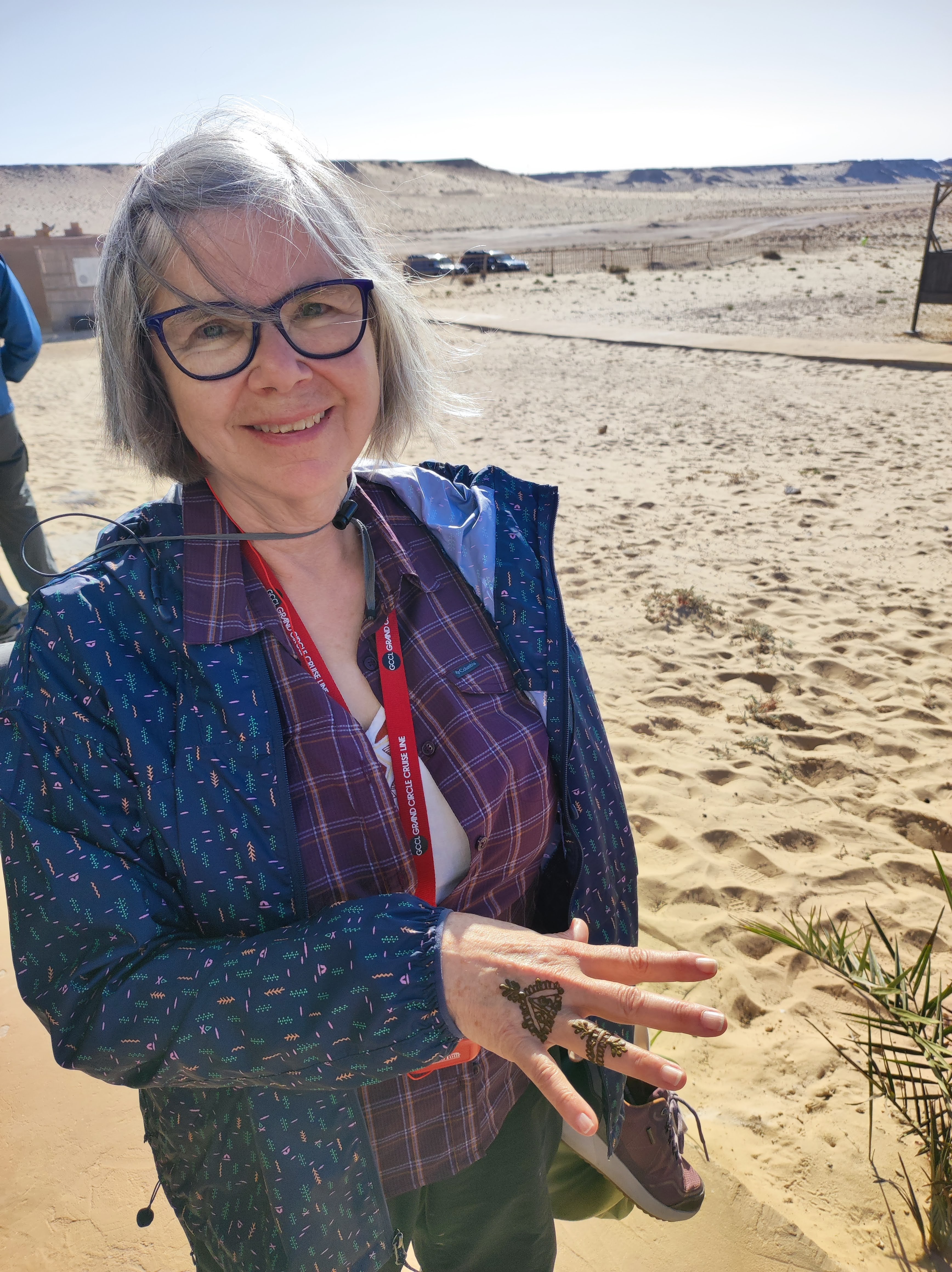
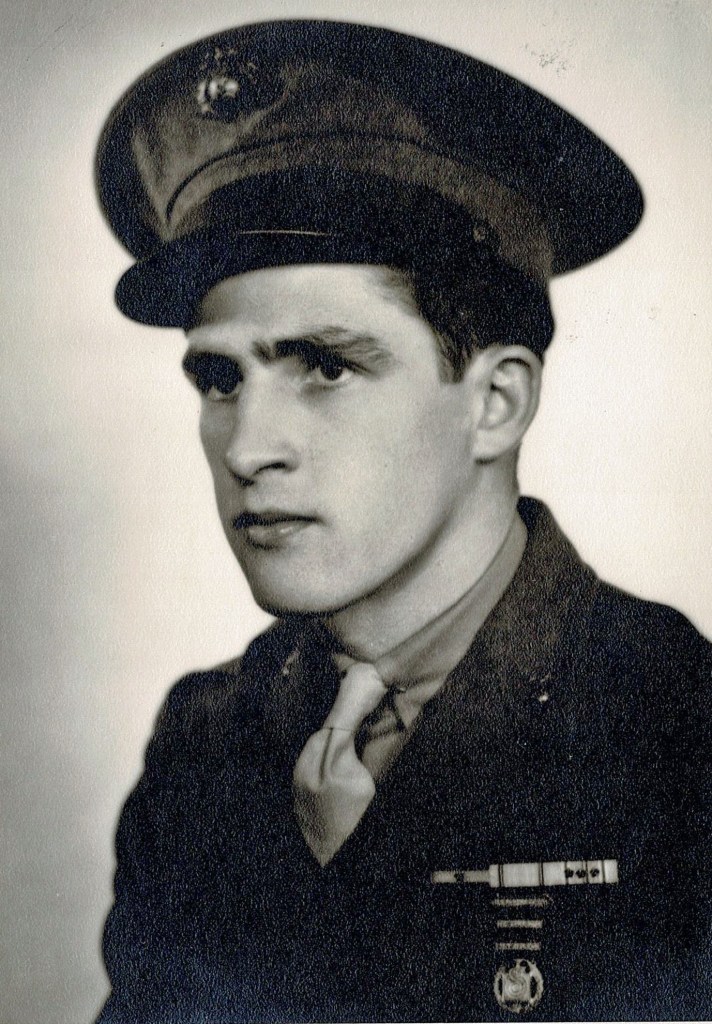

My father, Albert Thomas Lonski, wore his dress uniform for this portrait photograph. This uniform, his dress uniform, included a forest green coat, trousers of the same color, a khaki shirt, and tie. The insignia on his hat and lapel was the Eagle, Globe and Anchor (EGA). This was Marine Corps symbol. The next photo shows his Service ribbon bar at the top. This bar is divided into 3 parts. The Presidential Unit Citation on the left was awarded to all the men in his unit for heroism in action. His unit was Headquarters and Service company, !8th Marines. He was in the mapping section. In the center, the American Defense Service medal is represented. Military service members who served on active duty between 8 Sep 1939 and 6 Dec 1941 got this medal. In the right section is the Asiatic-Pacific Campaign Medal. It went to those who served in that area from 1941 to 1945. Albert had 3 service stars on this right side of his service bar. These stars were often called battle stars because they meant that he participated in a named campaign.
Albert’s sweetheart, Helen Wolfe, also served during WW2 in Normandy, France. Toward the end of her life she wrote her story of day of Victory in Europe.
She, an army nurse, was my mother. In this piece she reacts to the news the war has ended. She heard it as “La Guerre est finie.”
“La Guerre est finie” boomed the French voice from the radio shattering the darkness.
I stood alone and listened. I was caring for a large ward of wounded soldiers. It was midnight in France in 1945 (May 8). To all of us this meant we could go home again to our own families and our country.
I asked myself should I wake my soldiers and tell them. I didn’t, saying to myself what if it is a false report as it might be? For days the two armies faced each other in the valley. This meant that the Germans had finally surrendered the command to the Americans. It was very dramatic standing in that darkened room hearing the war was at last over. The radio became lively with chatter spoken in excited German voices. I spoke a little (German) and could make out only a little bit. I did understand that Hitler married his sweetheart, Eva Braun, then both committed suicides.
I stood alone in the dark talking to myself with world shaking news leaking around me. Oh, why didn’t I wake up some of my soldiers? I didn’t.  I did go to my night supper where all on duty went for a meal. There I got to share and say, “La Guerre est finie”. Most of them had not heard.
How different was the next night! I left the radio on for all the soldiers to hear a discussion about the GI bill. This bill would make a difference in the lives of these young men. They could go home, marry their sweethearts, have babies and go to school (with the help of this GI bill). It was a wonderful investment in people. Our government’s G I bill would make a difference to each of us and we were grateful and ready.
The next week I received five proposals of marriage. These soldiers were ready to start a family and start living.
I had a recent quarrel with my Albert, but he still held my heart. I accepted one of the offers, knowing I would not keep it. I, too, wanted to go to school.
Instead, we married as soon as we saw one another.
Eventually, we had two beautiful daughters (their oldest one being born almost exactly 9 months after they married). There was enough to do. We used the GI benefits and felt so rich with the 90 dollars the government gave us to live on. We soon had everything. We had two lovely children and enough to eat and La Guerre est finie, no more war.
We lived in my mother’s old house in Oregon. Albert remade it into a beautiful palace covered with stones he carried from the rock quarry (also on his mother-in-law’s property).
Our daughters grew daily.
Next part -Albert’s career
After years (of higher education), Albert was tired of college. He contributed (his skills) to making airplanes. He helped develop the 747. We moved around the country a lot with him working for Boeing. He helped get the Saturn Booster in the air.
It all ended (when Albert retired). We went back to our stone castle on the river. By that time we had four beautiful grandkids. What treasures they were and still are.
Now our country is in a miserable war (Iraq War) which they cannot win. I hope these soldiers can come home and be ordinary people again. Then perhaps la Guerre est finie can happen.
Albert Lonski Goes to War
Early life
Albert Thomas Lonski arrived in this world on February 6, 1922, In Bremerton, Washington, USA. This was the same year Hitler formed Jugenbund, predecessor to the Hitler Youth organization in Germany. Albert’s mother, Anna Luise Taubert, was born in central Germany. She came to North America as a young woman. Her brother, Walter Taubert, kept in contact with her and her family. He sent birthday cards to his nephew, Albert. Here is a photo of the postcard Albert received on January 21, 1933. Walter’s son, Helmut, who was Albert’s first cousin, wrote out the message. “Greetings to you, from your Helmet, Parents and Grandparents”. The grandparent would have been Luise’s mother who was also the grandmother of Albert.
This same Helmut joined the German army when grown. He likely belonged to Hitler Youth as a teenager.
When Albert was only 16, when he graduated from Franklin High School. Then in December of 1938, wanted to join the US Marine Corps. Young men were allowed to join at age 17 if they had written parental consent. It was likely Albert’s father, Thomas Lonski, who gave this consent. This must have been a difficult time in the Lonski household. Seventeen days after his 17th birthday on February 23,1939 Albert did join.
In the Marine Reserves
According to the Marine Muster Rolls from the National Archives, Albert drilled at the Canadian National Dock in Seattle. Dates included were March 1, 8, 15, 23, and 29.
On December 20, 1939, he qualified as an Expert Rifleman.
Albert’s unit, the second Division Combat Engineer Battalion, was activated on November 1, 1940, in San Diego, California. Albert stayed in Seattle, but drilled with his reserve unit at Aberdeen, Washington.
Out of the Reserves into Training- Camp Elliott
Pearl Harbor Attack occurred on December 7, 1941
Albert went to Camp Elliott before the Pearl Harbor attack. He trained at this camp in San Diego and is here in April 1941. Second Lieutenant, Ben Webtherwax, led class 2. Albert was a topographer. On the October muster roll he was also a topographer.
Still at Fort Elliott in January 1942, Albert was then a private 1st class working in the mapping section.
Camp Dunlap, Miland, California
By July of 1942, Albert trained in a California desert camp, Camp Dunlap. Here he met Helen Wolfe, a nurse working at Brawley Hospital. Three liberty passes for Albert have the wrong birth date typed at the top. This made him seem two years older than he was. Helen was 24 when they met; Albert was 20. When Albert showed Helen his liberty pass, she thought he was 22. Of course, the truth came much later and she was mad.
His October 1942 Muster Roll read,” Albert Lonski, computer, mapping section”.
New Zealand
In 1942 and 1943 New Zealanders in Wellington shared their space with 15,000 young American Marines. The U.S. Marine corps used Wellington, New Zealand as a base for training and staging during WW 2. It was also a place for soldiers to rest and recover from being in the field.
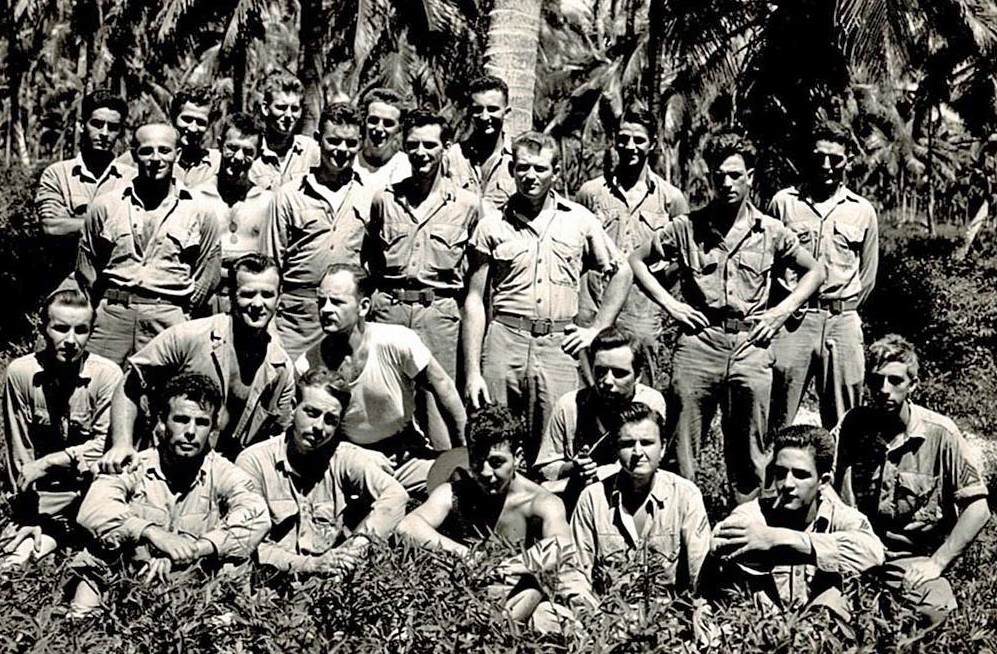
Albert with the 2nd Marine Division arrived in January 1943. His unit was stationed at Camp McKay. Albert took photos. Few had written descriptions; many were stamped on the back with this mark.

Here is a group photo of his unit in New Zealand. He is in front on the right. This is written on the back, “March 29, 1943, after 3 months.” Albert is in the front on the right.
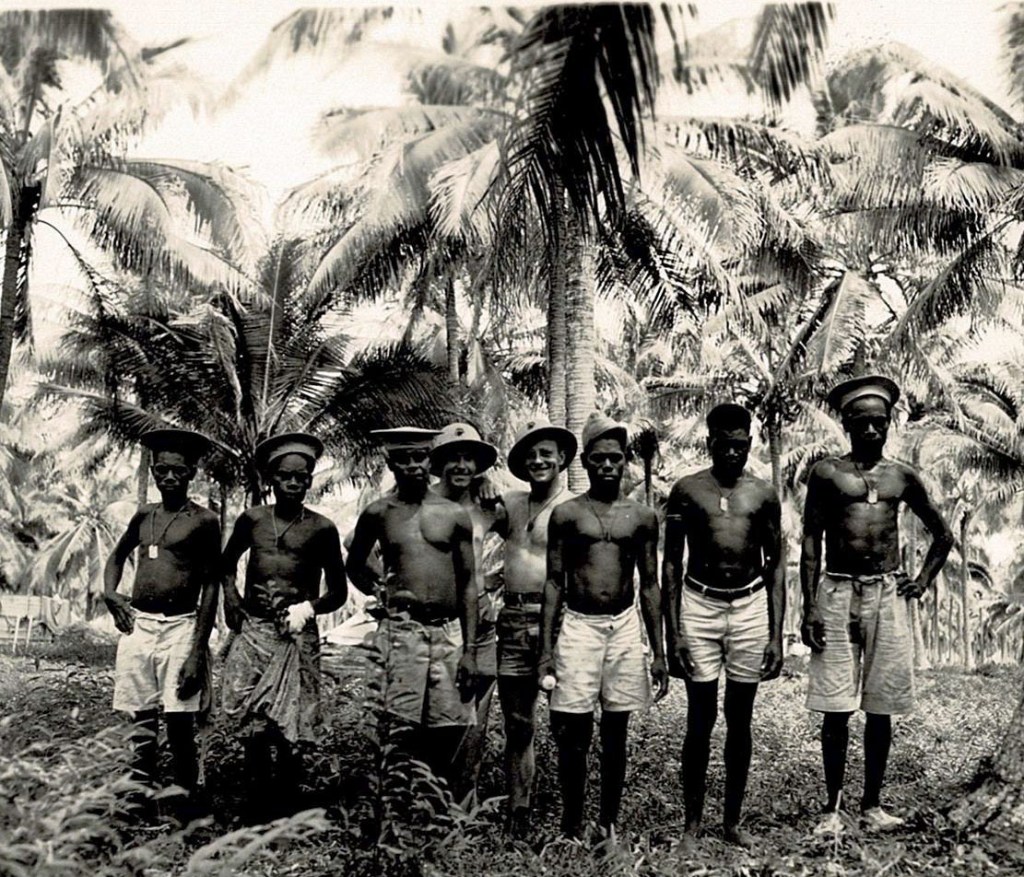
He photographed more than a few natives while in New Zealand.
More photos

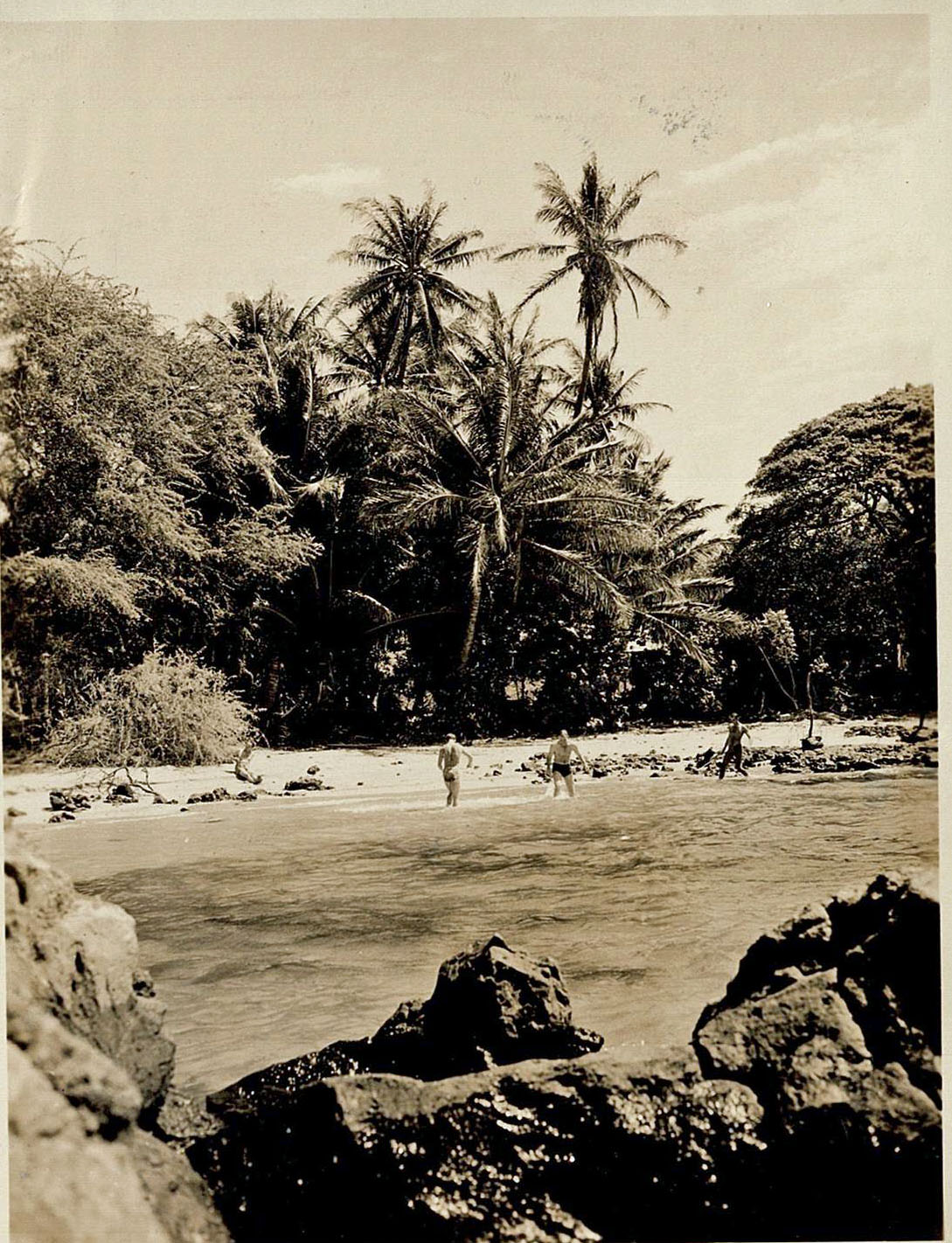


In the Field
His first stay here was brief. He left on December 12, 1942 aboard the USS Bellatrix. He wore the 3 stripes of a technical sergeant on his sleeve. The Marine Muster Rolls don’t say where he went, just that he went to sea and was in the field.
Campaigns
On September 8, 1942, headquarters changed Albert’s Division to the first H&S co., 18th Marine (engineer), 2nd Marine Division. H & S stood for Headquarters and Service.
The engineers of the 18th took part in campaigns in Guadalcanal, Tarawa, Saipan, Tinian and Okinawa. According to his discharge papers, Albert “participated in action against the enemy”. He was at the Battle of Saipan of the Marianas Islands from 16 June 1944 to 9 July 1944”.
Saipan
Before Japan attacked the fleet at Pearl Harbor on December 7, 1941, crippling the fleet, Saipan was a farming community. After Japan took formal control of Saipan in 1919, large sugar cane plantations were planted there. Warm, humid air, year-round rain and much sun made the land lush with plants. The terrain was mountainous. Cliffs and gullies dotted the landscape. There were many dark caves and swarms of mosquitoes. Malaria was a problem.
Months before the U.S. Army, Marines and Navy attacked on June 15, 1944, the Japanese had fortified the island with extra troops. Many of the civilians’ homes were confiscated for military housing. People were forced to live in caves.
War raged in Saipan from June 15 to July 9, 1944. These are the dates on Albert’s separation papers that he fought there. About 3,426 Americans were killed. Japan lost 24,000 soldiers and 22,000 civilians were also lost. Many of these civilians committed suicide; some were shot by their own soldiers.
Before this battle Albert had been temporarily attached to the 2nd Division Marine Fleet. He was then with the Amphibians Corps. The first day of the Battle of Saipan saw a fight between American amphibious tanks and Japanese tanks. At the end of the first day most of these vehicles had been damaged beyond repair. Most were put out of commission by soldiers in fox holes.
Albert, a phototopographer in the mapping section and a technical sergeant, never mentioned his fighting days in Saipan. What he did talk about was his surveying and mapping of Saipan. A phototopographer surveys and maps a terrain based on territorial photographs. The navel construction battalions, the Seabees, built the Navel Advance Base, Kogman Point Airfield and Isley Field on Saipan. Airbases on these islands were critical to winning the war in the Pacific.
There is a documentary online from Real Time History called Saipan 1944 Total War in the Pacific. Here is a link to Total War.
Albert took photos.
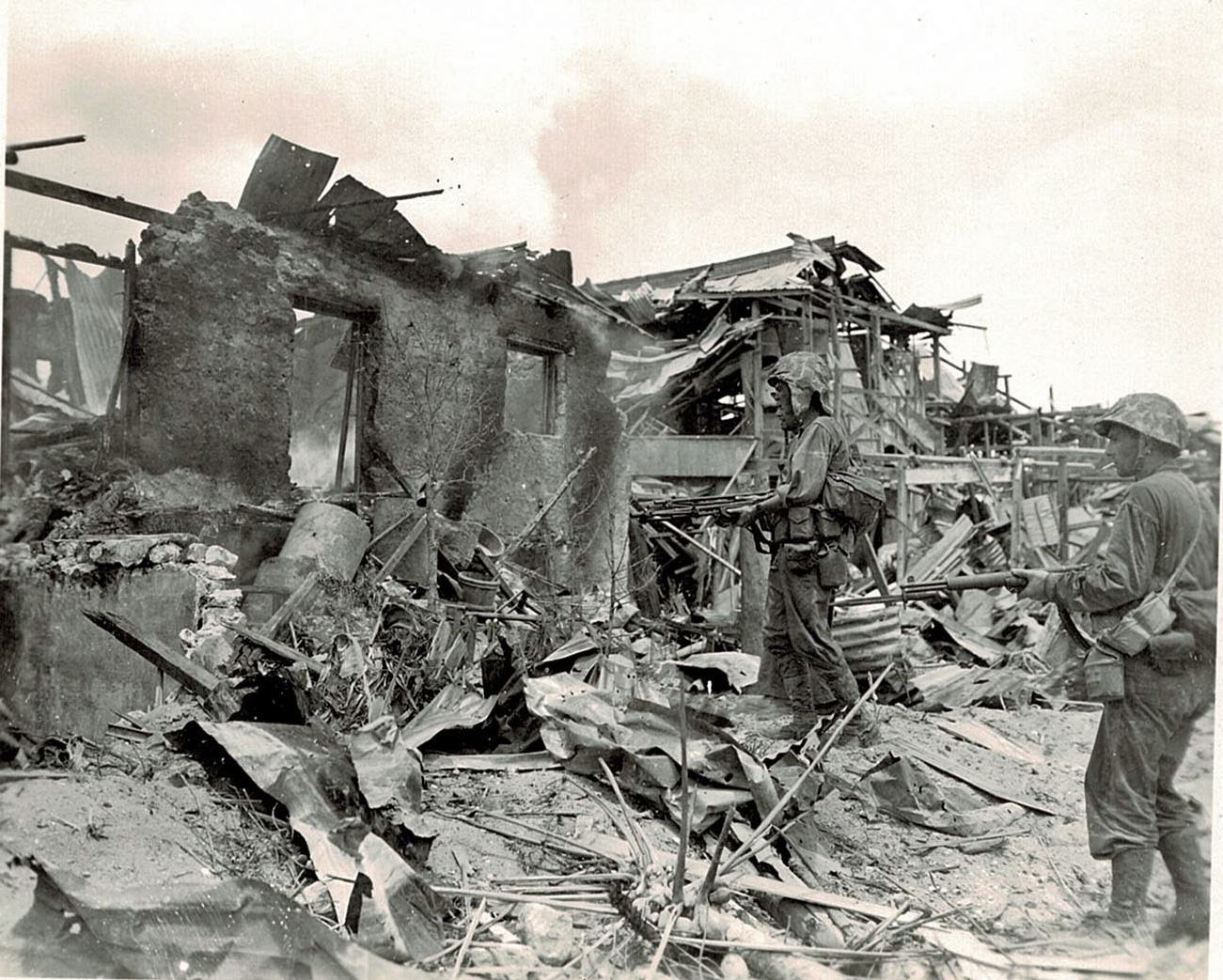
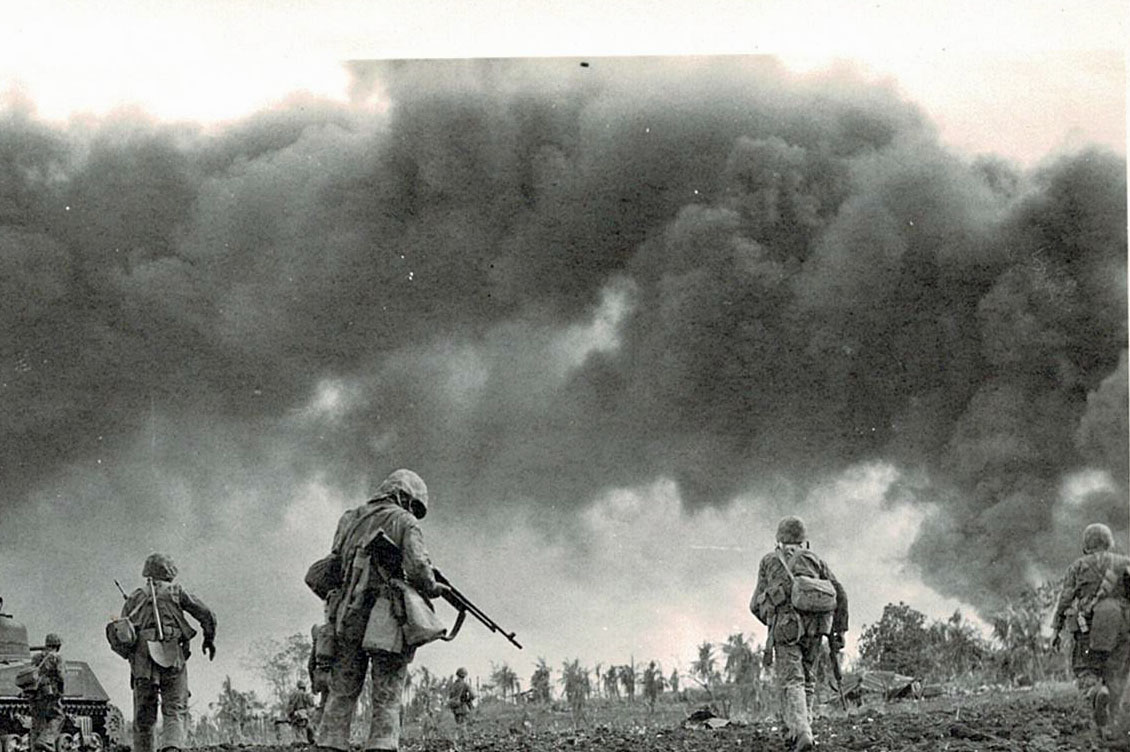
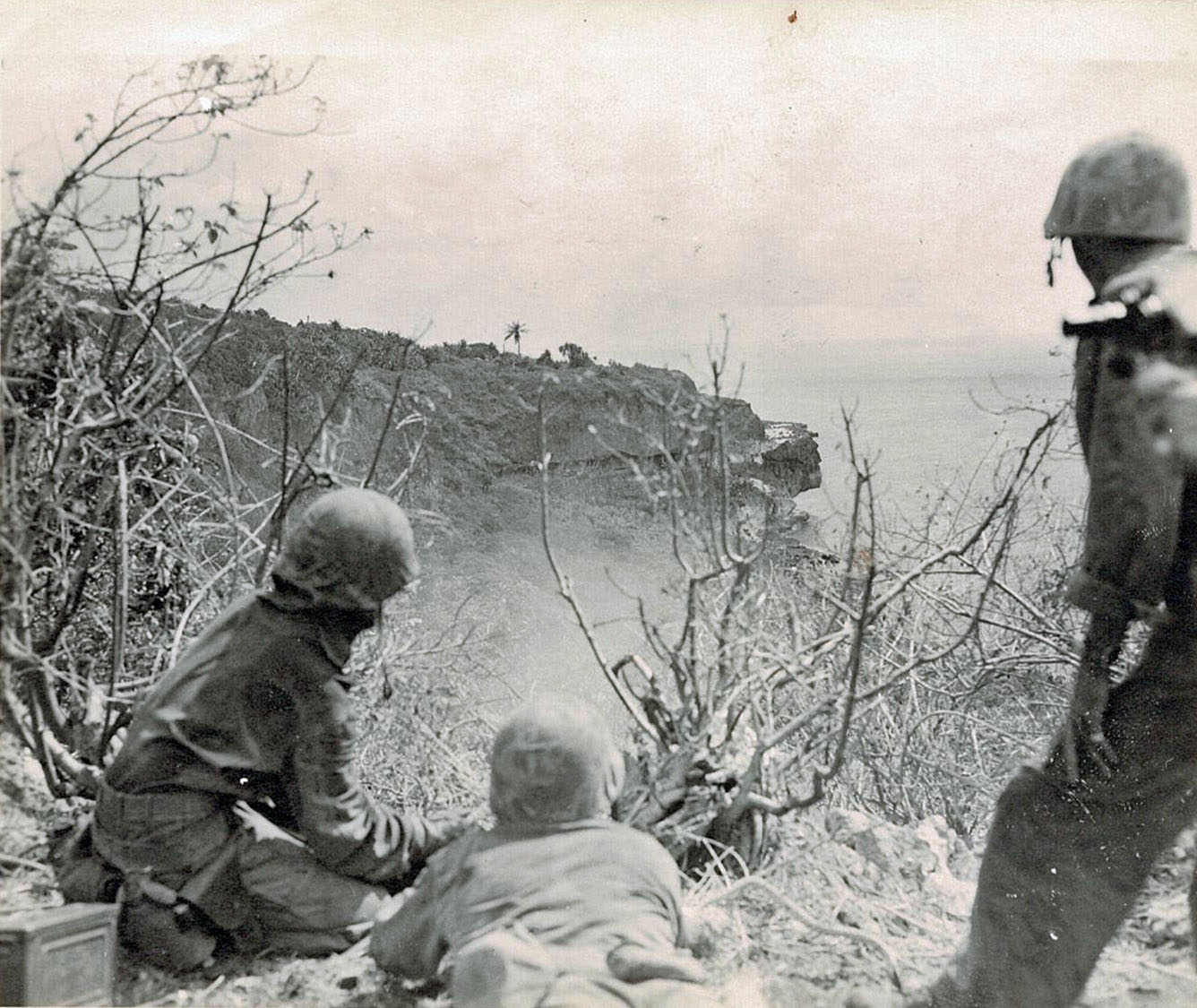
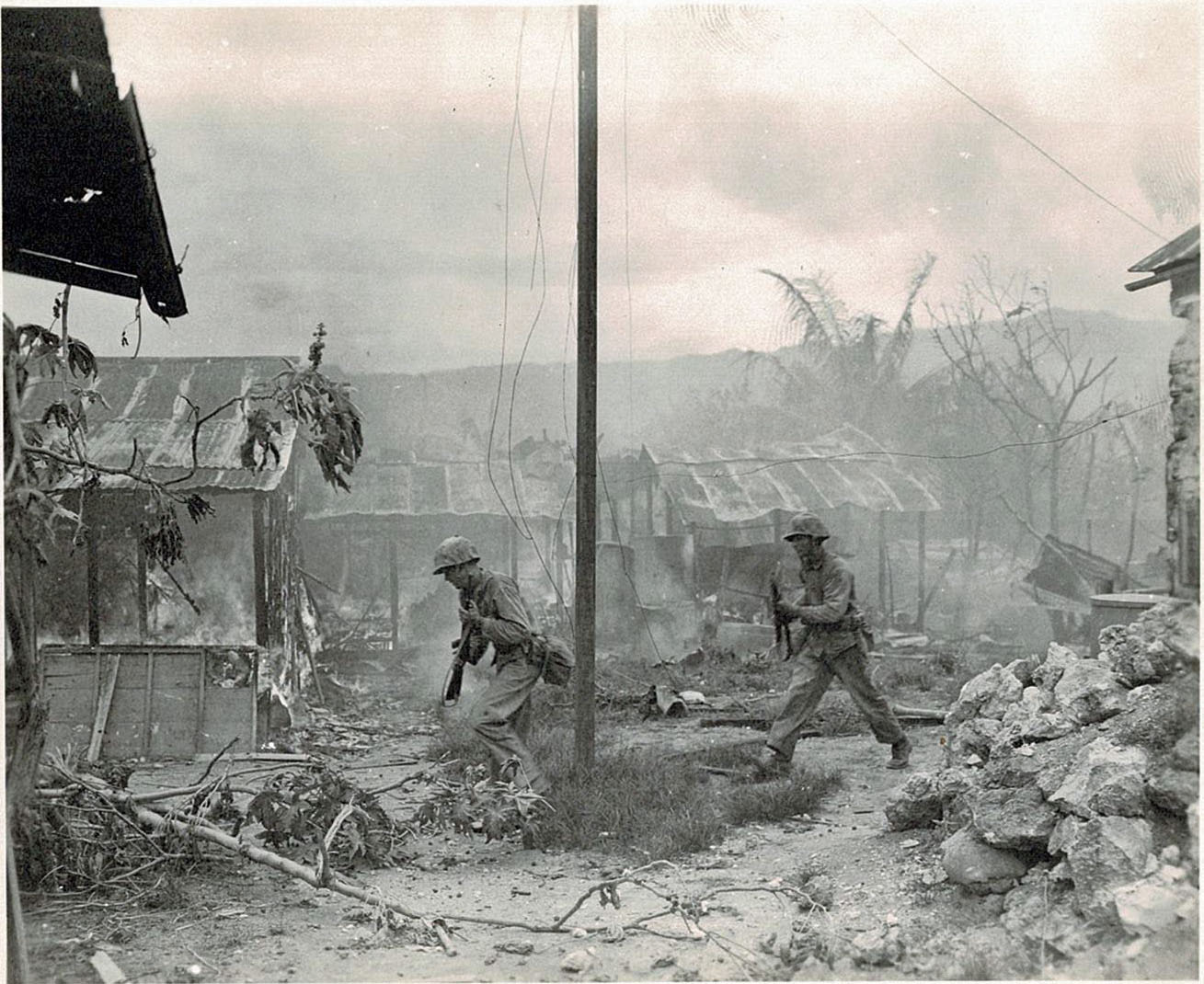
Going Home
By September 1945, Albert back in the United States, was assigned to Camp Lejeune, North Carolina .Albert had been assigned to active duty on November 7, 1940. He received his Honorable Discharge Button at Camp Lejeune, North Carolina on September 20, 1945. The Marine Corps also gave him a travel allowance of 5 cents per mile to get home to Seattle, Washington.
In Albert’s collection of photos from his service days, I found a photo that touched me. An Asian child, barefoot and beautiful, leans against a dead snag on a deserted beach. The sun is shining as shown by the sharp dark shadows behind the snag.
I don’t know if the photo is posed or is something Albert just happened across.
I do know I felt achingly sad, looking at it.
What was Albert doing here? He had become an engineer. Engineers like to build things.


 francescabellcoursenperritt.com
Leave a comment